Review: Emergence / Silent Screen (The National Ballet of Canada)
Continuing their 75th anniversary season, The National Ballet of Canada has brought together two contemporary works that have made their mark on the company for the second performance of the season: Crystal Pite’s Emergence and Sol León and Paul Lightfoot’s Silent Screen. While Pite’s Emergence has become a familiar and much-loved work since its 2009 premiere, Silent Screen is a newer presence in the repertoire that has already left its mark. Both are dark, theatrical and haunting, drawing the audience into heightened, otherworldly spaces shaped as much by atmosphere as by movement.
On my first viewing of Silent Screen in 2024, I wrote that one encounter with the piece felt almost too brief, so I was especially happy to have the chance to see it again. This time, sitting a little closer to the stage, I found myself even more mesmerized by the details of its strange, dark dreamscape. What makes Silent Screen so effective is that it draws you in without requiring any context or explanation. There is no conventional story, yet the shifting images, bodies and sounds feel like fragments of a narrative, piecing themselves together as the work unfolds. There are moments that feel epic, followed by something intensely intimate.
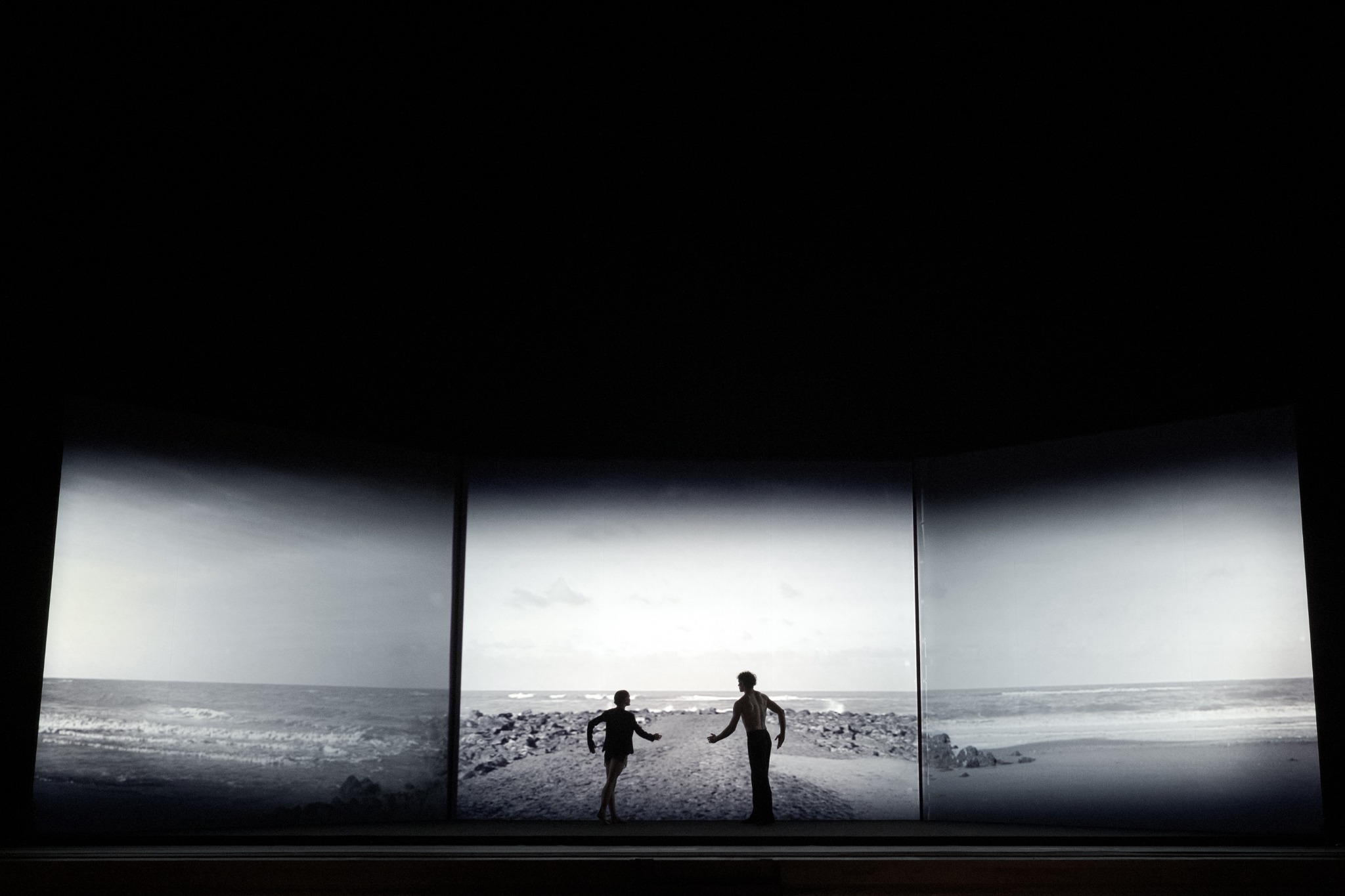
The work opens with just two dancers, Christopher Gerty and Hannah Galloway, later joined by Ben Rudisin, as the three are framed against three screens that draw them into this world. Individual figures in the videos are presented at a scale that makes them feel just as real as the dancers onstage, moving with a similar physical presence and timing. The dancers never seem to react to these images around them; instead, they appear to exist within them, as though the live performance and the film are simply two parts of the same world.
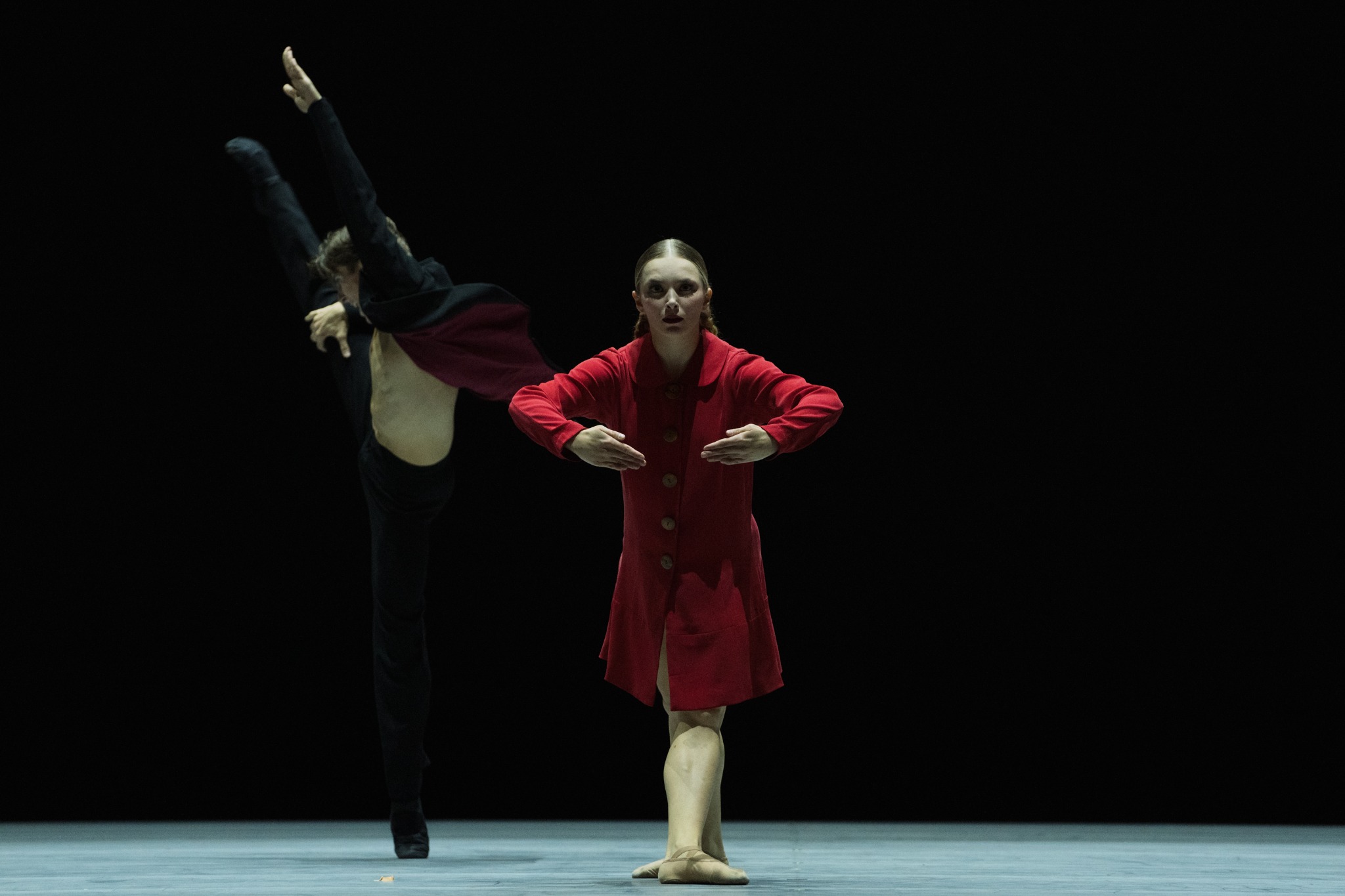
That feeling is helped by the movement itself. There is something distinctly old-fashioned about the choreography, recalling the exaggerated physicality of silent film while giving it a contemporary, abstract spin. The dancers move with extraordinary precision, moving their entire bodies into each position before holding it for a moment and moving on to the next. A gesture is never rushed. There is a deliberate theatricality to every shift of the body, amplified by the dancers’ facial expressions. A full-face grin appears repeatedly, not quite sinister but certainly not comforting either, simply theatrical, exaggerated and slightly surreal.
Eventually, the screens disappear, opening up the full stage for more dancers, yet the cinematic feel never leaves. Philip Glass’s music carries the work through this transition, maintaining its dreamlike quality even as the world of the piece grows larger. Noah Parets really shines here. His dancing has a sharpness and speed that cuts through the more measured quality of the choreography, with a level of commitment that makes every movement feel immediate. Parets brings an explosive clarity to the choreography. His attack is simply gorgeous to watch.
I left Silent Screen feeling much the same way I did the first time: mesmerized. But seeing it again made me appreciate just how carefully every image, gesture and pause has been constructed. It is a work that is hard to look away from, drawing you into a strange, dark dreamscape that feels as though it existed before we entered the theatre and will continue after we leave.
Following intermission, Crystal Pite’s Emergence takes the stage, a work that has always escaped me despite its frequent returns to the National Ballet’s repertoire. Created for the company in 2009, it was Pite’s first commission for a large ballet company, and seventeen years later, it is easy to understand why the work has stayed in the repertoire. Dark, theatrical and slightly ominous, Emergence creates a strange world that feels part bee hive and part bird’s nest. Owen Belton’s score adds to its sense of unease, with its strange, droning sounds creating an atmosphere that feels as though something is always about to happen.
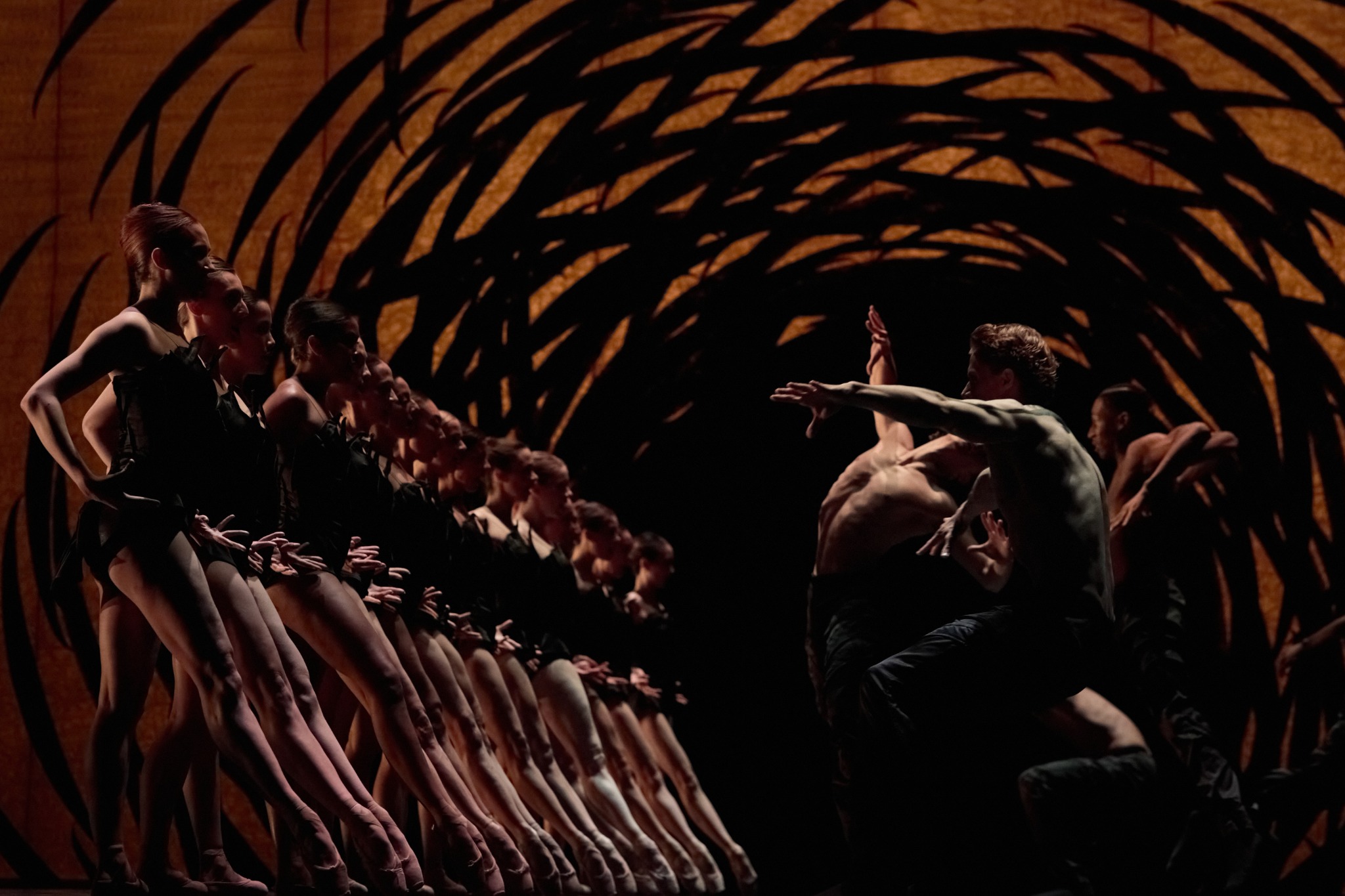
A large dark orange backdrop dominates the stage, covered in sweeping black strokes that gather toward a huge circular opening at the centre. It looks like an opening into a giant nest or hive, with a black tunnel extending into darkness. The dancers emerge from this tunnel, immediately establishing the sense that we are entering their space.
The ensemble is largely divided between men and women, with distinctly different physical languages. The women dance en pointe, their bodies taking on an almost bird-like quality through sharp wrists, lifted elbows, raised chins and necks, as though wings might suddenly unfold from their backs. The men have a heavier, more grounded physicality. At points, the dancers wear masks that make them feel less human, almost as though black bees nests have formed around their heads.
Throughout the work, the women whisper counts, which is one of its most memorable elements. The repetition of the counting makes it feel almost hypnotic, like a spell being cast across the stage. The counting, combined with precise, repetitive movement, gives the work an almost ritualistic quality, as though the dancers are following rules that exist within this world but are unfamiliar to us.
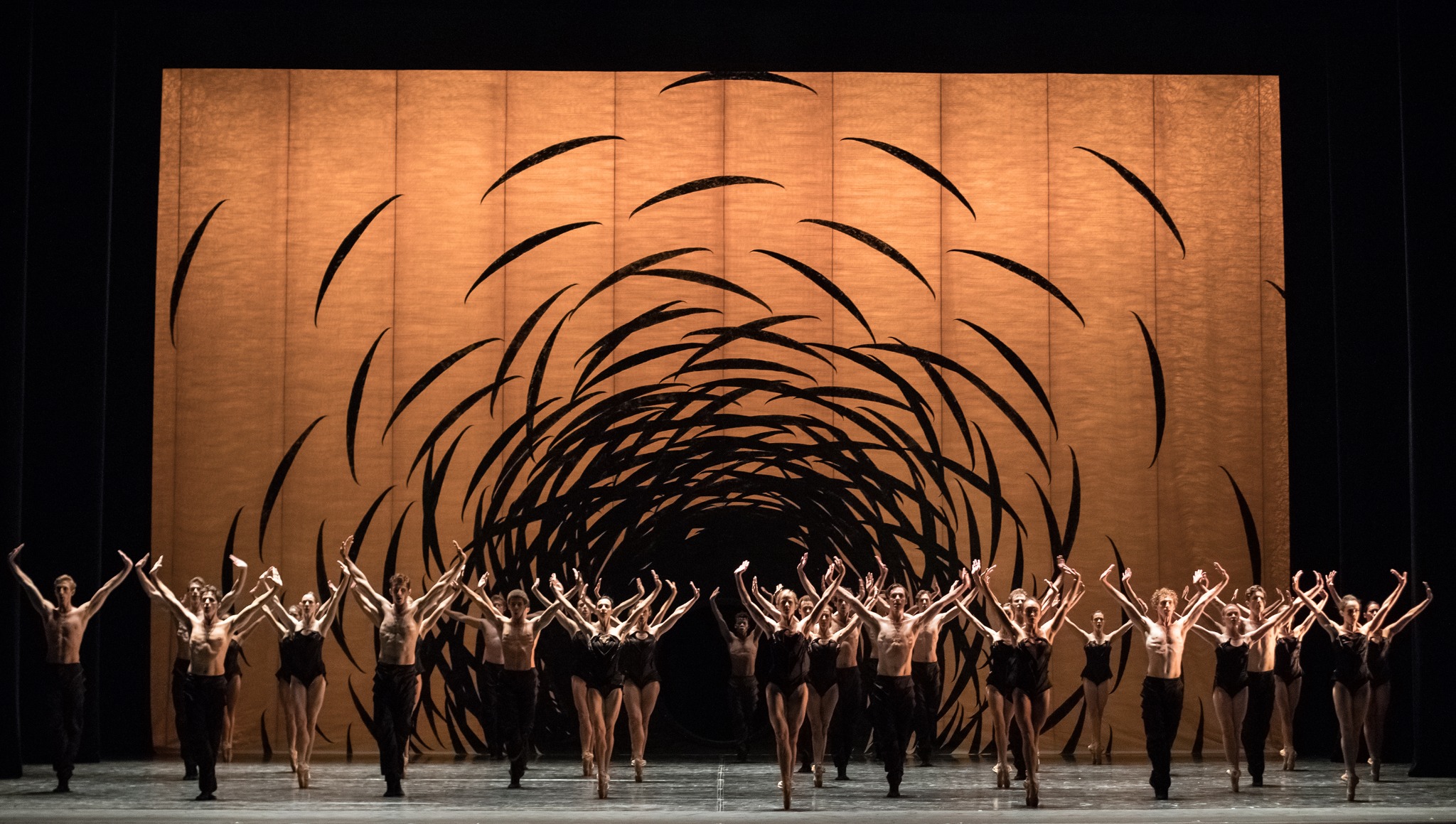
Shaakir Muhammad’s dancing was a standout for me, bringing tremendous strength, technical control and commitment to the choreography. Yet it is the collective performance that ultimately makes Emergence so thrilling to watch. The ending brings the full ensemble together in a gorgeous display of unison, the dancers moving with extraordinary attack and force, repeatedly cutting their arms into a high V shape. After watching these individual bodies twitch, flick, bend and shift throughout the work, seeing the entire ensemble suddenly operate as one is both beautiful and powerful.
For fans of Pite, Emergence has some of the same physicality, darkness and theatricality that made Dark Matters so compelling. It is easy to understand why audiences continue to return to the piece. Both Emergence and Silent Screen create dark, otherworldly spaces, but they draw us into them in different ways. One builds its world through the collective movement of bodies, while the other blurs the line between live dancers and film. Both leave you with the feeling that you have stepped briefly into a world that exists beyond the theatre. A beautiful double bill.
Emergence / Silent Screen, presented by the National Ballet of Canada at the Four Seasons Centre for the Performing Arts (145 Queen St W, Toronto, ON M5H 4G1), is playing until November 20th, 2026. For tickets, please click here.
National.Ballet.ca | Socials: @nationalballet
- Photo 1: Hannah Galway and Christopher Gerty in Silent Screen. Photo by Karolina Kuras. Courtesy of The National Ballet of Canada.
- Photo 2: Noah Parets and Emma Ouellet in Silent Screen. Photo by Karolina Kuras. Courtesy of The National Ballet of Canada.
- Photo 3:Artists of the Ballet in Emergence. Photo by Ted Belton. Courtesy of The National Ballet of Canada.
- Photo 4: Artists of The Ballet in Emergence, 2018. Photo by Karolina Kuras. Courtesy of The National Ballet of Canada.
Written by Deanne Kearney | DeanneKearney.com @deannekearney
0 Comments Add a Comment?