Review: Flight Pattern / Suite en Blanc (The National Ballet of Canada)
Playing with light and darkness, the National Ballet of Canada’s newest double bill
showcases the expressive power of large ensembles. Serge Lifar’s Suite en Blanc presents light as clarity and discipline, with pure dance at the forefront, while Crystal Pite’s Flight Pattern frames darkness as a collective condition defined by loss and endurance, exploring the physical and emotional toll of the refugee crisis.
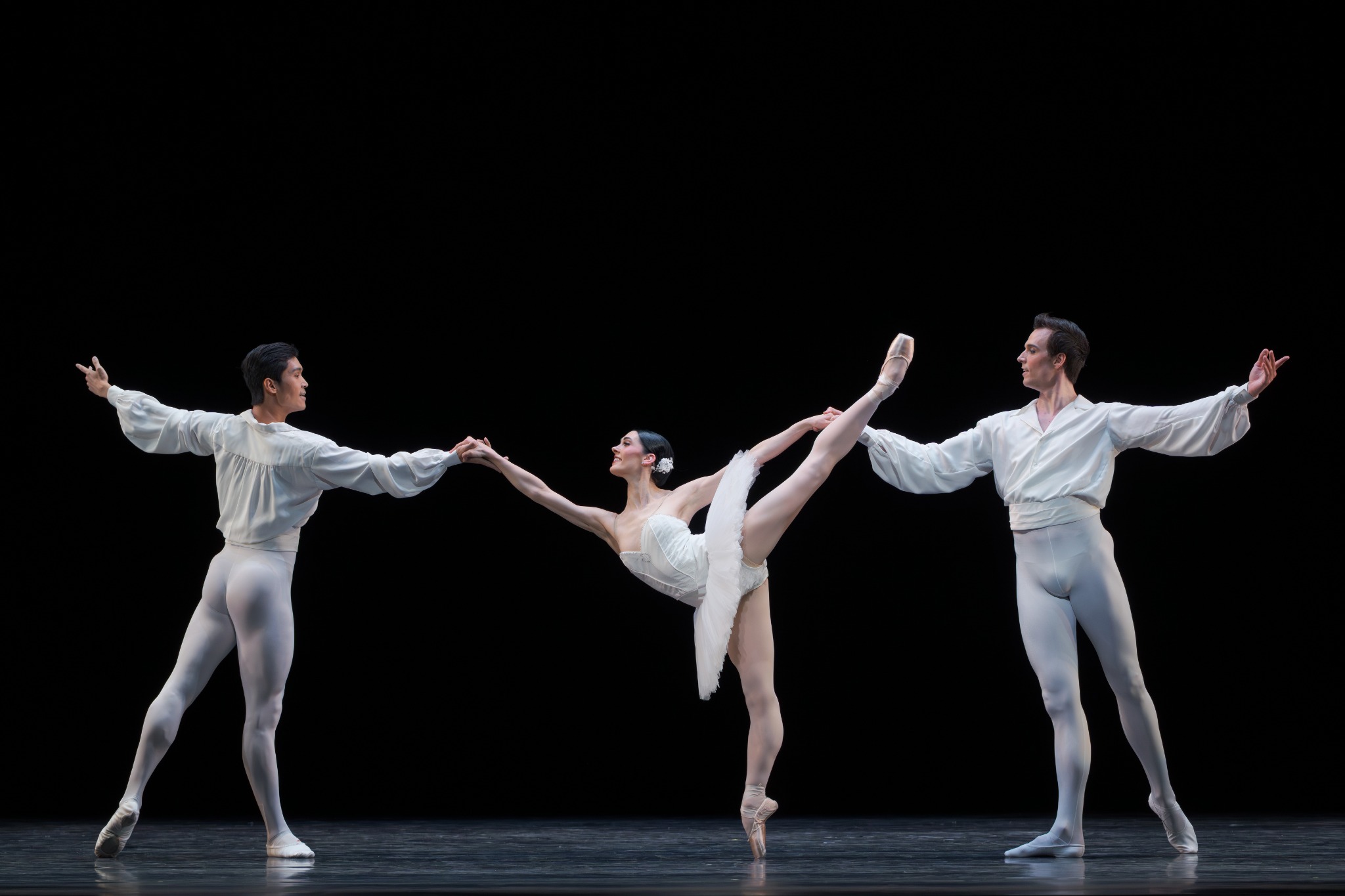
Opening the evening is Suite en Blanc, which offers exactly what many audiences come to the ballet to see: white pancake tutus, pointe work, and a focus on classical choreography. There is no narrative at play; instead, the ballet foregrounds the artistry and athleticism of the form through synchronization and variations that reinforce ballet’s ranked divisions. Women execute seemingly endless fouettés, arabesques, and bourrées en pointe, while the men deliver technically demanding tours and beats.
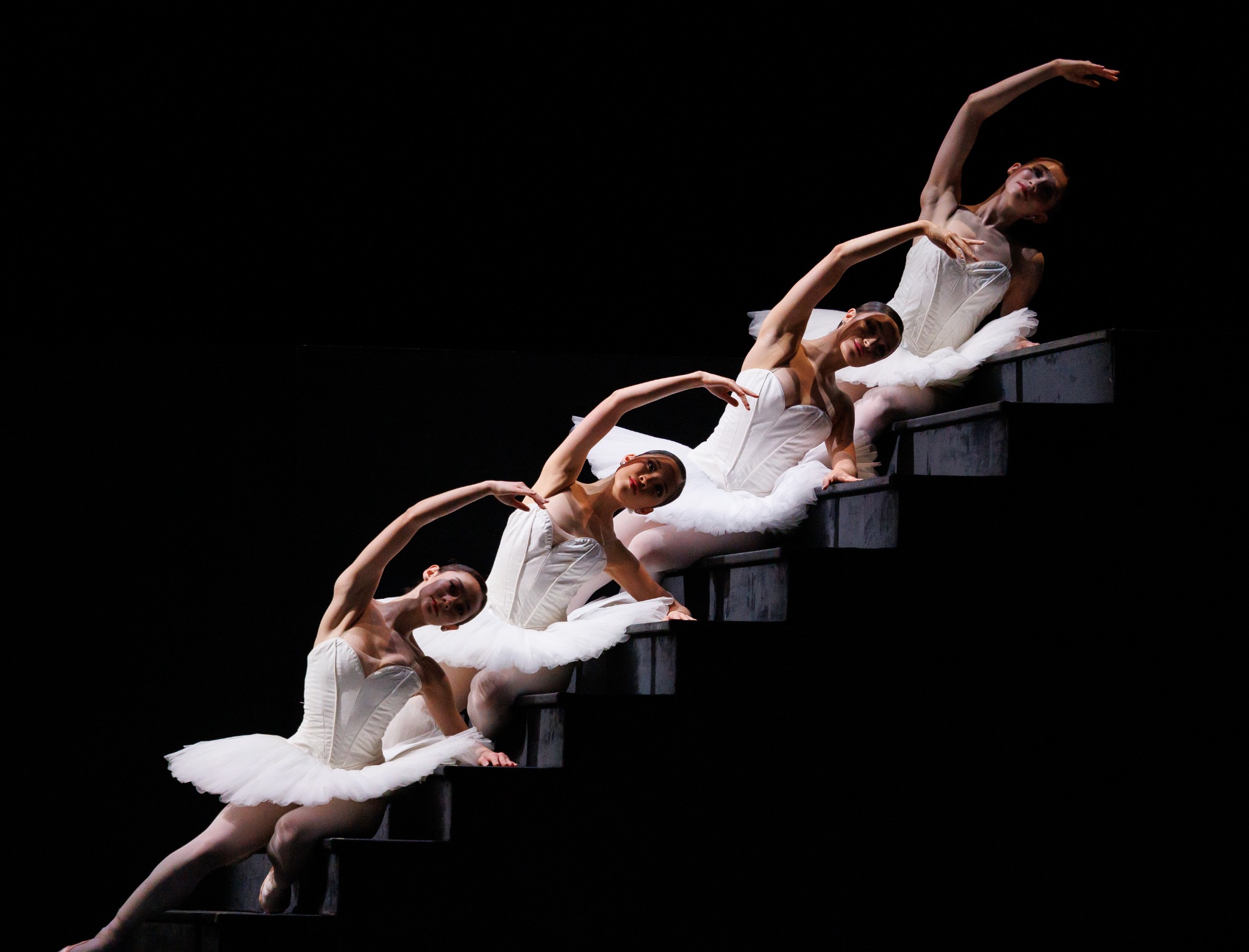
Performed by thirty-six dancers, Suite en Blanc was first choreographed by Serge Lifar in 1943 for the Paris Opéra Ballet and also appeared in the National Ballet of Canada’s 2024/2025 season. The company dances the work confidently overall, with only a few minor slips on opening night. Audible reactions from the audience, gasps and applause breaks, follow difficult feats such as extended fouetté sequences, underscoring the work’s crowd-pleasing appeal.
Two standout performances for combining technical brilliance and charisma come from Koto Ishihara in the Presto variation and Genevieve Penn Nabity in the well-known La Cigarette variation. Both dancers were brilliant in their use of tension and release in their arms and wrists, paired with a gorgeous overall strength and clarity of line.
One of the most effective elements of this ballet is a raised black platform at the back of the stage, which creates beautiful layered poses throughout the work. By arranging the ensemble across multiple planes, the platform reinforces the ballet’s focus on symmetry and scale. A fantastic work for the company to have in its repertoire!
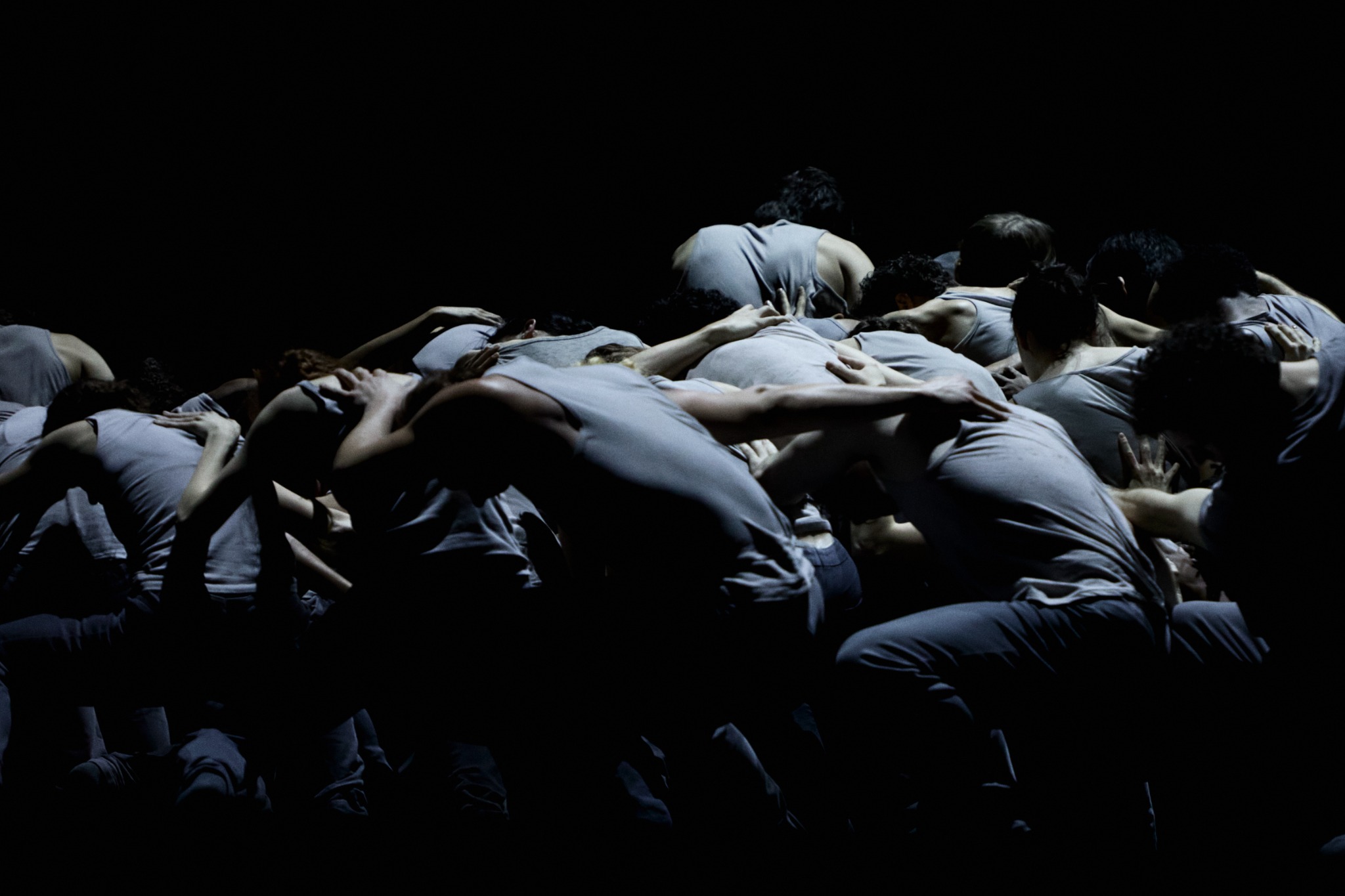
But the true weight of the evening arrives following intermission with Flight Pattern, choreographed by Crystal Pite. Set to Henryk Górecki’s Symphony of Sorrowful Songs, and performed with renowned Canadian soprano Measha Brueggergosman-Lee, Flight Pattern embodies both the suffering and resilience of refugees. There is no overt narrative, allowing meaning to emerge instead through the collective weight of bodies moving together, breaking apart, and reforming. The result is quietly overwhelming.
The work unfolds in near darkness. A large cast of dancers, dressed in long, dark, unadorned coats designed by Nancy Bryant, lean forward and back in unison, their chins leading the movement as they advance slowly across the stage in a dense clump. The choreography emphasizes repetition and restraint: walking, stopping, waiting. Lines form and dissolve. Dancers queue, then fold to the floor, sleeping on rolled-up coats used as makeshift pillows. Through subtle shifts of shuffled feet, a body or two is briefly pulled from the group and individual stories surface momentarily before being absorbed again into the mass. One of the most affecting threads in the work is the loss of an infant by a refugee mother. Cue the waterworks.
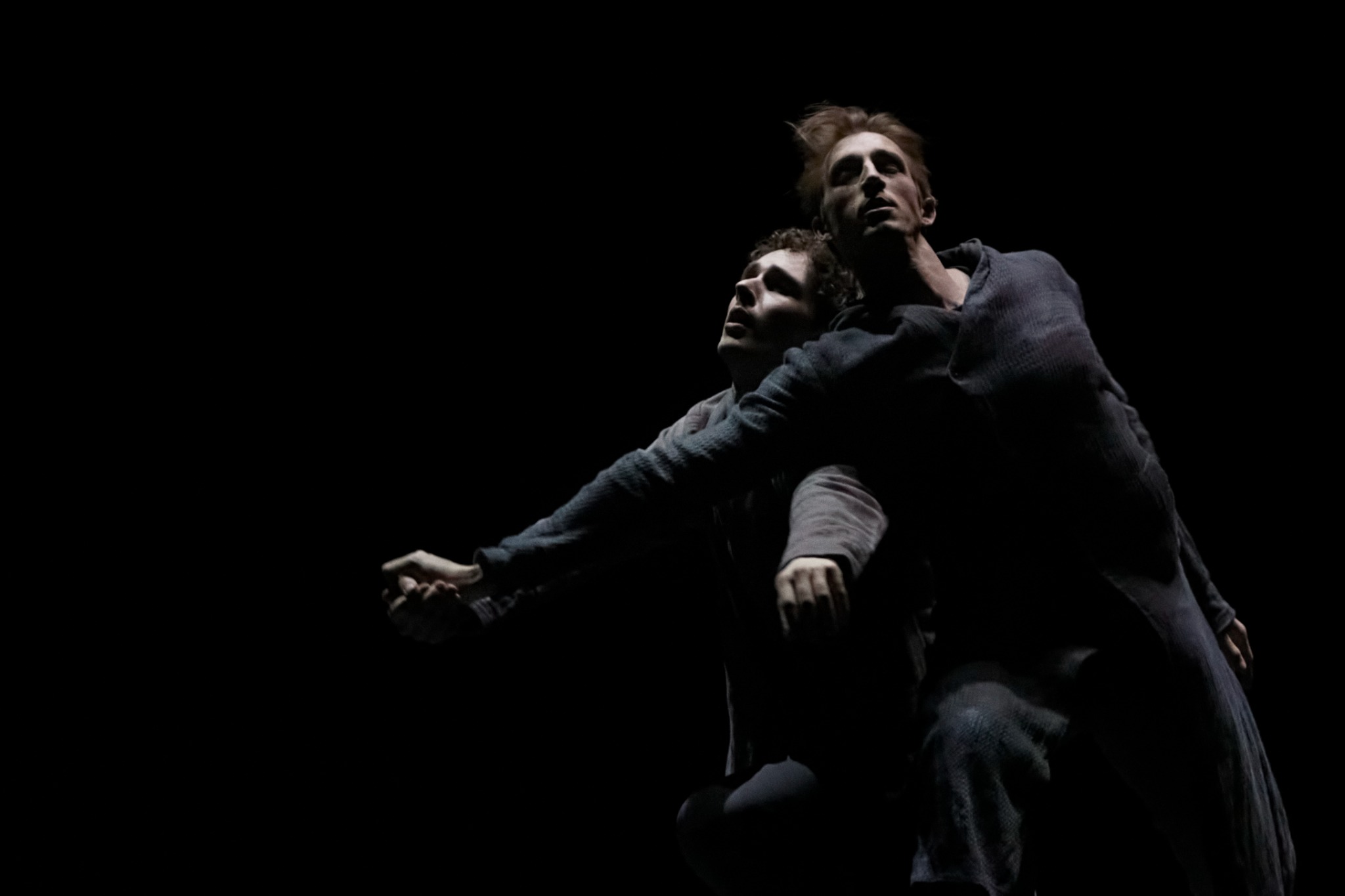
Still, there are fleeting moments of hope glimpsed through a narrow passage of light where the line of dancers continues forward, or at least that is how I read it. Tom Visser’s lighting keeps the work grounded in shadow, allowing light to appear fragile and provisional.
I say this without hesitation: Flight Pattern is a masterclass in choreographic craft. Pite’s creativity and control of form, structure, and pacing is quite extraordinary. I am always excited to see her work, and I am once again amazed by how thoroughly it exceeds my expectations. The impact of this piece is undeniable.
Flight Pattern is difficult to watch at times, as it should be. Parental guidance is recommended, as the work engages with heavy subject matter and includes theatrical haze. These elements are handled with care, but they carry real weight.
The second half of the program is worth the ticket alone, but the strength of the programming as a whole lies in the contrast between darkness and light and the careful juxtaposition of form and feeling across the double bill with such large ensemble works.
Flight Pattern / Suite en Blanc runs at the Four Seasons Centre for the Performing Arts through to March 6, 2026.
Flight Pattern / Suite en Blanc, presented by the National Ballet of Canada at the Four Seasons Centre for the Performing Arts (145 Queen St W, Toronto, ON M5H 4G1), is playing until March 6th, 2026. For tickets, please click here.
Warning: Parental guidance recommended for Flight Pattern. Contains stylized depiction of infant loss. Please note this production features theatrical haze.
National.Ballet.ca | Socials: @nationalballet
- Photo 1: Peng-Fei Jiang, Beckanne Sisk and Chase O'Connell in Suite en Blanc. Photo by Karolina Kuras. Courtesy of The National Ballet of Canada.
- Photo 2: Artists of the Ballet in Suite en Blanc. Photo by Bruce Zinger. Courtesy of The National Ballet of Canada.
- Photo 3: Artists of the Ballet in Flight Pattern. Photo by Ted Belton. Courtesy of The National Ballet of Canada.
- Photo 4: Aidan Tully and Ben Rudisin in Flight Pattern. Photo by Ted Belton. Courtesy of The National Ballet of Canada
Written by Deanne Kearney
DeanneKearney.com @deannekearney
0 Comments Add a Comment?