Review: Heaven (Sasha Ivanochko/ The Theatre Centre)
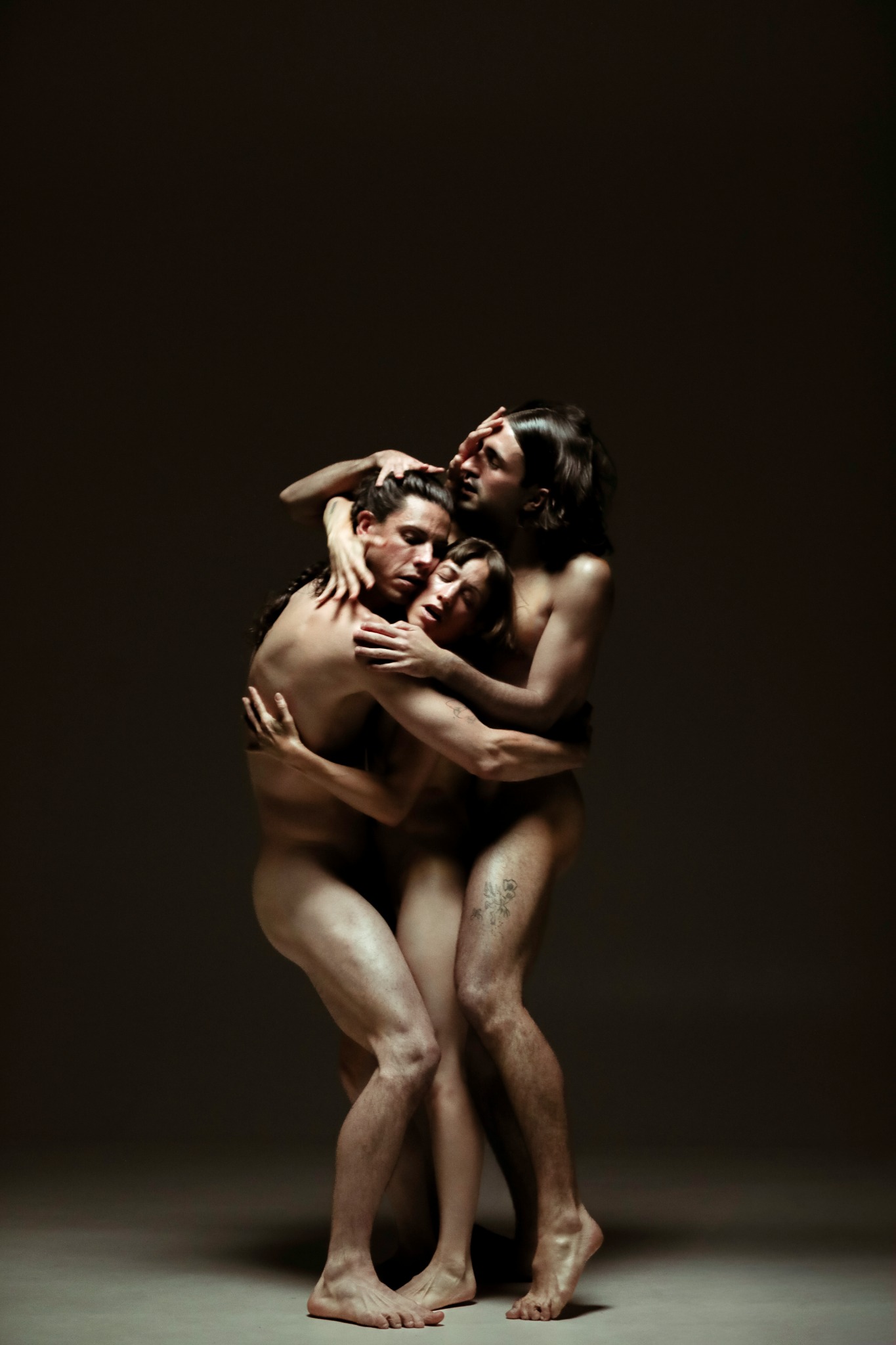
One hour. Three dancers. Full nudity. No music.
These are the conditions of Sasha Ivanochko’s Heaven, a contemporary dance work that offers an intensely physical exploration of human connection. This work asks what it means to reach toward another person physically, emotionally and sexually, and whether we can ever truly overcome the boundaries of our own bodies.
First created in 2006 and originally performed by Ivanochko alongside Louis Laberge-Côté and Matthew Waldie, Heaven received critical acclaim at its premiere and went on to tour for several years. Nearly two decades later, Ivanochko has returned to the piece, this time with Jessie Garon, Scott McCabe and Sully Malaeb Proulx performing the choreography.
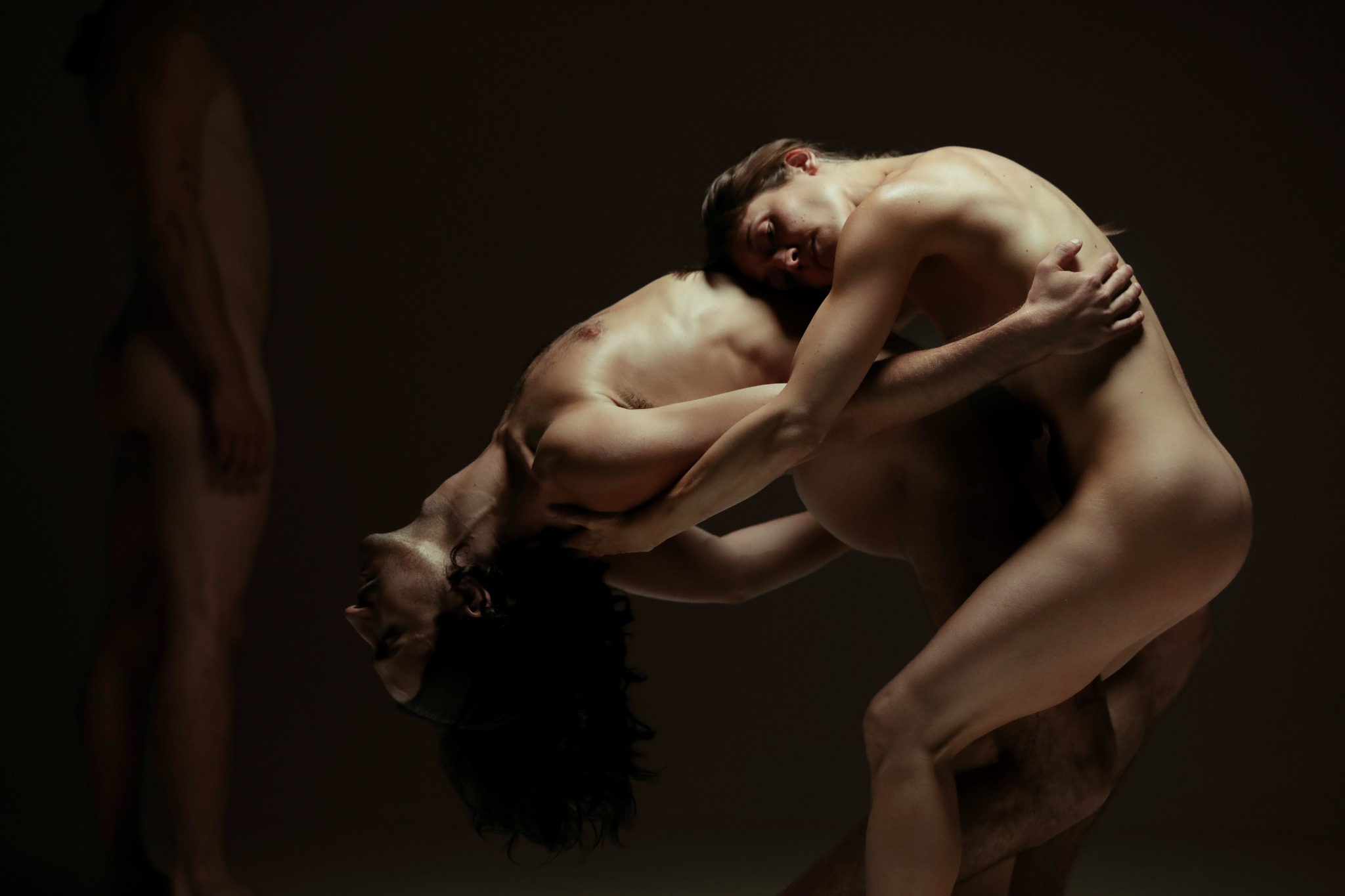
The dancers are anything but shy in their physical exposure, but Heaven takes its time revealing just how far it will go. The work begins with a certain vulnerability and tentativeness before gradually opening into something more uninhibited, intimate and primal. Garon, McCabe and Proulx touch, mirror one another, intertwine, collide, play and struggle, moving between tenderness and aggression.
There is no conventional narrative to tell us what these encounters mean. Yet through them, Heaven suggests that we are ultimately alone in our experience, alone in our bodies, even as we seek pleasure, intimacy and connection with other bodies. At least, that is my reading of the work; it leaves plenty of room for other interpretations.
The nudity, believe it or not, ultimately creates fewer distractions. There are no costumes interrupting the lines of the dancers’ bodies; instead, we see the full body and all its power in motion. This alone is extraordinarily beautiful. I have seen nude dance before, but rarely with the degree of proximity created by the 140-seat Franci Boni Theatre. There is an unavoidable intimacy in watching three naked bodies move only a few feet away.
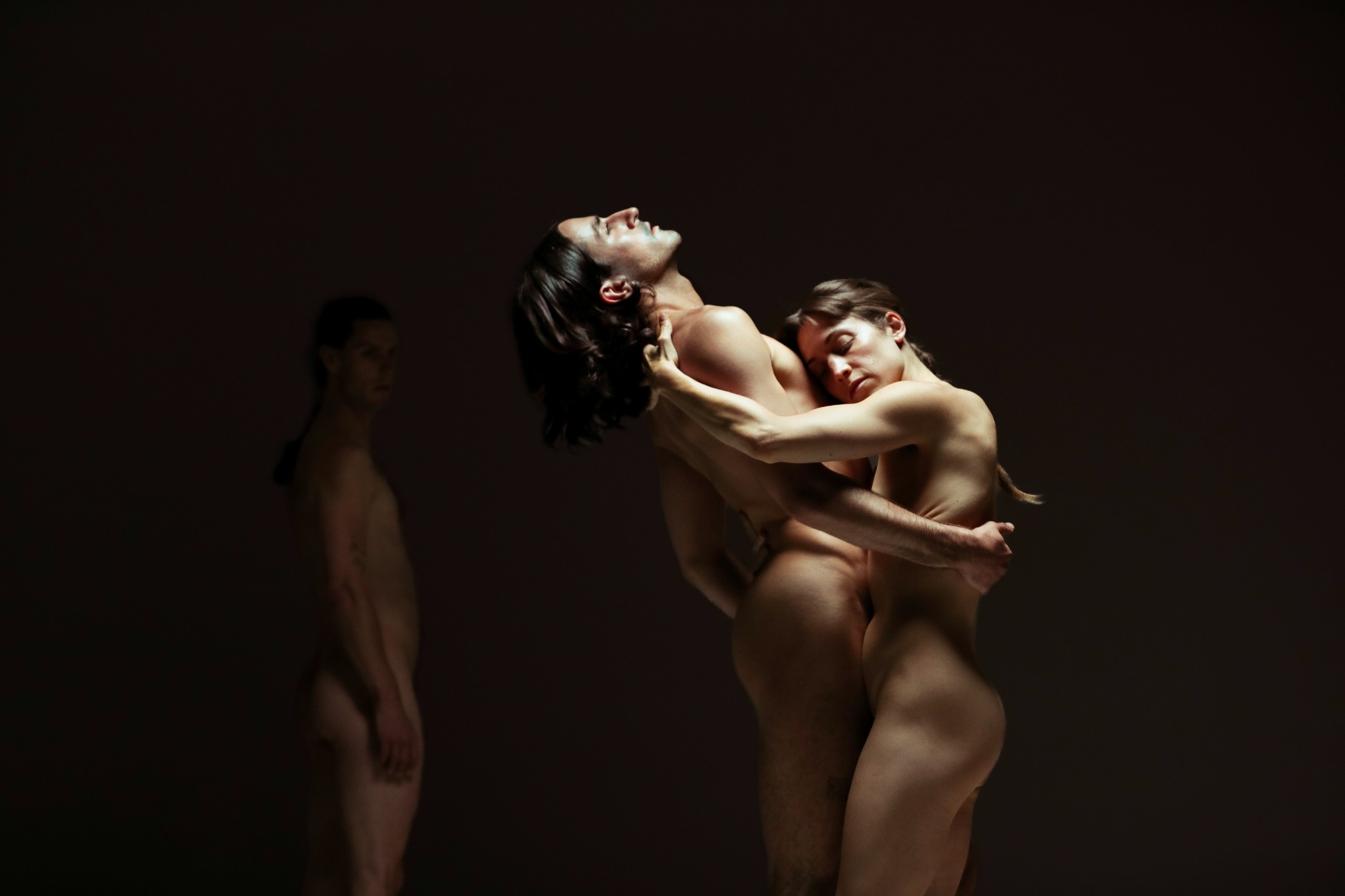
The work is not, despite its lack of conventional music, actually silent. Instead, its soundscape is generated by the physicality of the dancers themselves: the pulse of footsteps, breathing and gasping, bodies slapping into one another, intertwining and slamming against the floor. The sounds make the physical effort of the dancing impossible to ignore. We don’t simply watch the bodies connect; we hear the friction of that connection.
The lighting follows a similar progression. James Proudfoot’s design plays with shadow and exposure, beginning in darkness and gradually revealing more of the dancers and the stage. Light naturally casts shadows and highlights across different parts of the naked body, creating images that are often simply beautiful. A single recurring overhead light is also particularly effective, casting the dancers in an almost heavenly glow.
There are memorable physical images throughout: the repeated stomping of feet across the space, beautiful tableaux emerging from more physically demanding sequences, cartwheels, handstands and full-body slides across the floor. A mirror sequence, in particular, brings a welcome sense of playfulness and humour to the work, offering a lighter counterpoint to its more intense physical encounters.
Religious imagery appears in flashes, from prayer-like gestures to movements that seem to reach beyond the body. Yet Heaven is not particularly interested in illustrating a religious conception of the afterlife. Its heaven is much more immediate and bodily.
Heaven is a work that asks a lot of its audience. Full nudity, an intimate theatre and an hour spent watching bodies touch and pursue one another demand a particular kind of attention. But the nudity isn’t there for shock or spectacle. Instead, it becomes part of the work’s larger inquiry into what bodies can share and what they ultimately cannot. We can reach toward one another, mirror one another, touch and play and find pleasure together, but we remain inside our own skin. In Heaven, that distance between bodies is both the problem and the point.
Heaven, choreographed by Sasha Ivanochko and presented by The Theatre Centre in Toronto, runs until October 3, 2026. Performances take place at the Franci Boni Theatre at The Theatre Centre, 1115 Queen Street West, Toronto. Tickets range between $21.50 – $45.50 and can be purchased here. For more information, visit theatrecentre.org.
All photos by Kendra Epik.
Written by Deanne Kearney | DeanneKearney.com @deannekearney
0 Comments Add a Comment?