Review: LEGENDS: Signature Programme 1 (Fall for Dance North)
Fall for Dance North’s LEGENDS: Signature Programme 1 brings together an eclectic lineup of artists and dance styles, with one very big name getting most of the attention: Tessa Virtue. The most decorated female figure skater in Olympic history is taking on a completely new challenge, making her off-ice performance debut in The Unruly Heart, a new solo choreographed by beloved Canadian choreographer Alyssa Martin. The chatter about this partnership has been happening in my household for months, and it is easily one of the most anticipated pieces of the festival.
But Virtue is just the beginning. The programme also brings Hubbard Street Dance Chicago’s Bob Fosse and Gwen Verdon reconstruction, Théâtre du Mouvement’s intimate and surprisingly playful duet about aging, an intergenerational Bharatanatyam work from Sampradaya Dance Creations, and a new work from The National Ballet of Canada by Canadian choreographer and Ballet West Principal Dancer Katlyn Addison.
The programme saves Virtue for last, and I’m going to do the same.
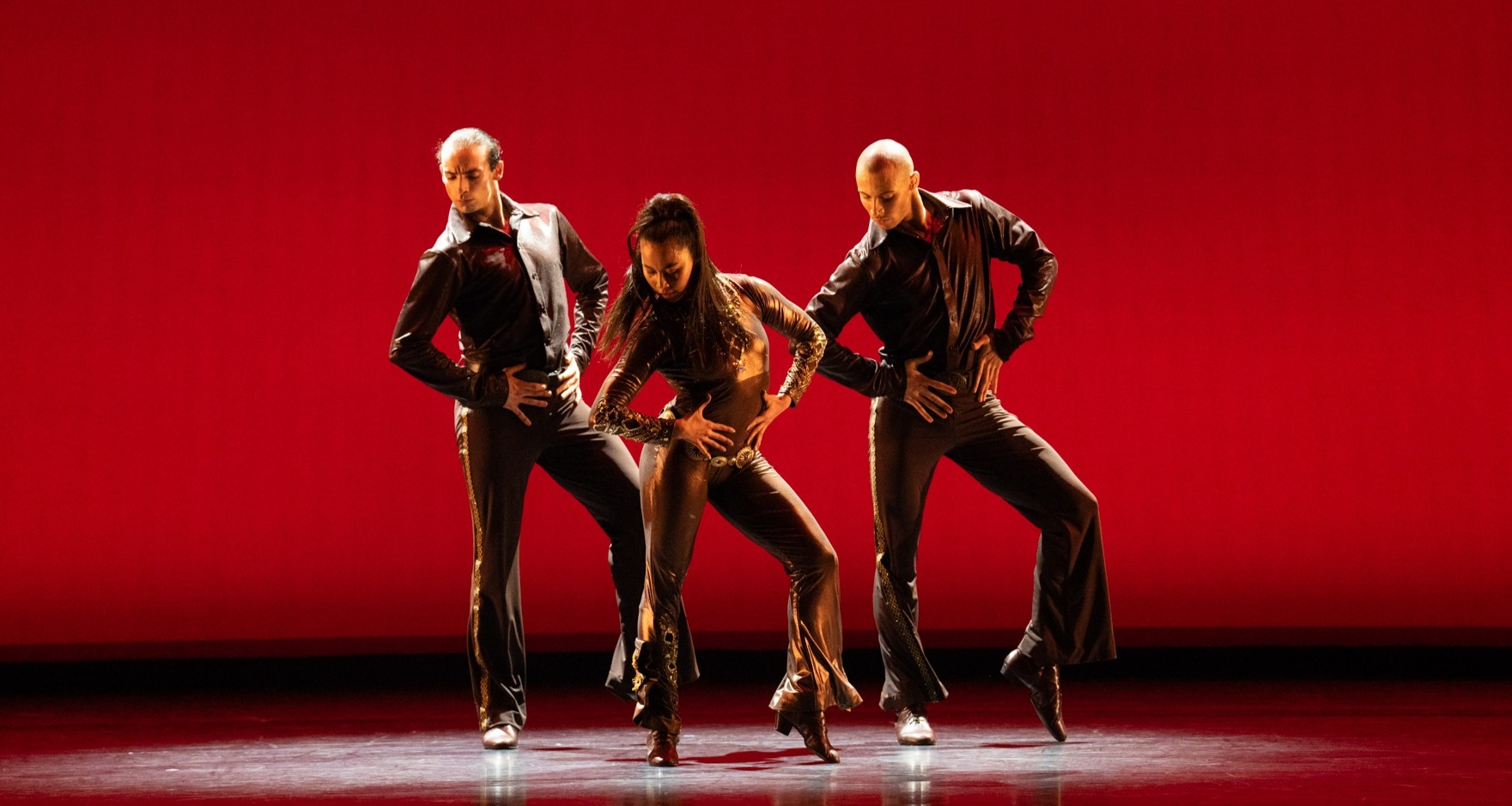
Hubbard Street Dance Chicago brings a little Fosse flair to open the programme with Sweet Gwen Suite. Choreographed by the legendary pair Bob Fosse and Gwen Verdon, the piece brings together three short works: Mexican Breakfast, Cool Hand Luke and Mexican Shuffle. The work starts with three dancers against a saturated orange backdrop that frames them against an otherwise completely bare stage, allowing all of the simple but detailed movement to stand out. The dancers are dressed in fun brown suits with flared bottoms and glitter accents, designed by Bobby Pearce. Prop cigarettes are another fun touch, with the dancers smoking them in a perfectly timed moment. The whole thing has just the right amount of theatrical pizazz.
I have always been a big Fosse/Verdon fan, but I did not realize until seeing this piece just how much of my Fosse viewing has happened through a screen rather than live. As fun as watching Fosse clips online can be, nothing beats seeing those quirky, beautiful details in person: the tiny shoulder rolls, hip thrusts and precise little body isolations. There is a cheekiness to the movement and performance that feels like a perfect way to celebrate these two legends and the choreographic style they are famous for, and a very fitting way to kick off the programme.
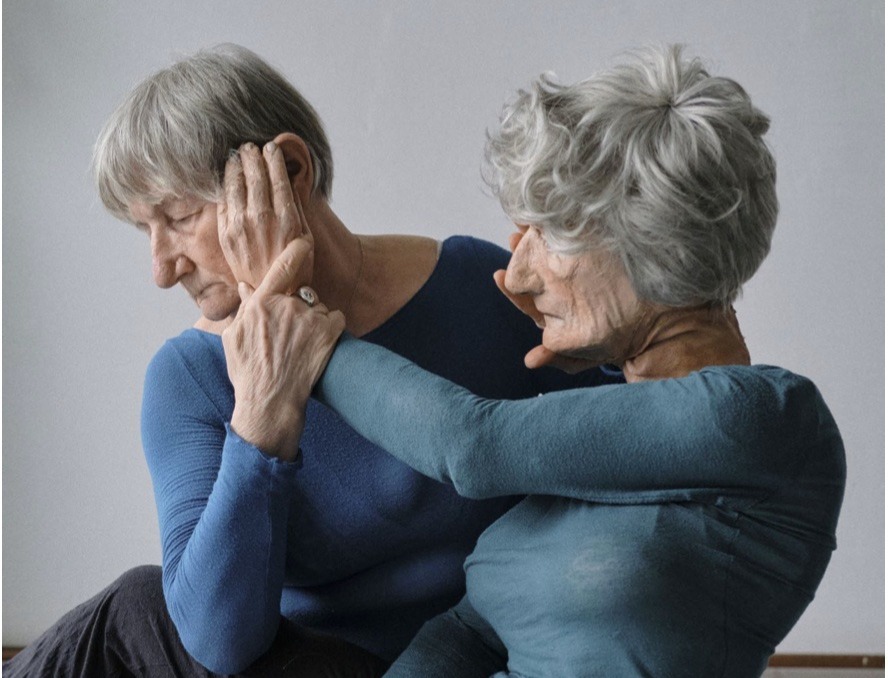
After the sharp, playful energy of Fosse, I was admittedly a little nervous about moving into a slower piece, but Ma P’tite Dame by Claire Heggen and Théâtre du Mouvement won me over completely, and, by the end, it seemed to have won over the audience too.
The concept alone is fascinating. When Heggen was 40, she created a life-size puppet of herself at 80, imagining what her future self might look like, and now, at 80 herself, she returns to the stage to dance with that imagined older version. The result is a strange, beautiful and, at times, funny duet about aging and our relationship with ourselves as we get older. There is also a playful look at the expectations we place on older people, and how we think someone at a certain age should move, behave or even take up space.
During the work, Heggen’s relationship with the puppet shifts constantly between tenderness, frustration and companionship. There is something almost therapeutic about watching both Heggen and the audience work through the realities of aging on stage: the beauty of it, the discomfort, the loss and the inevitable humour that comes with having a body that changes. Heggen is a true legend and a remarkable artist, and Ma P’tite Dame is a beautiful example of an artist continuing to question and explore at the age of 80.
After intermission, Parampara: Rooted & Rising brings Bharatanatyam to the stage from Sampradaya Dance Creations and Sampradaya Dance Academy. The work is divided into two parts, beginning with twelve young dancers before shifting to a mixed-gender group of older dancers. While the two sections feel quite distinct from one another, putting these two groups of dancers side by side offers a chance to see the form through different stages of training and technical difficulty.
Rooted, choreographed by Atri Nundy, is a youthful piece filled with layers and formations that let you get lost in the beauty of it. The choreography creates these beautiful moments where the dancers seem to become part of one larger moving picture, before breaking apart and reforming again, all with a fun and youthful energy.
Then Rising, choreographed by Suma Suresh, shifts to the older dancers, and the energy changes as the choreography becomes more complex. There is more individual movement alongside the group work, with faster and more complicated footwork and rhythms that become increasingly demanding as the piece builds. By the end, the pace has really picked up. I have seen a fair amount of Bharatanatyam over the years, and this stood out to me for its technical strength and synchronicity. The two works have different energies, but seeing them together offered an interesting look at the range and development of the form.
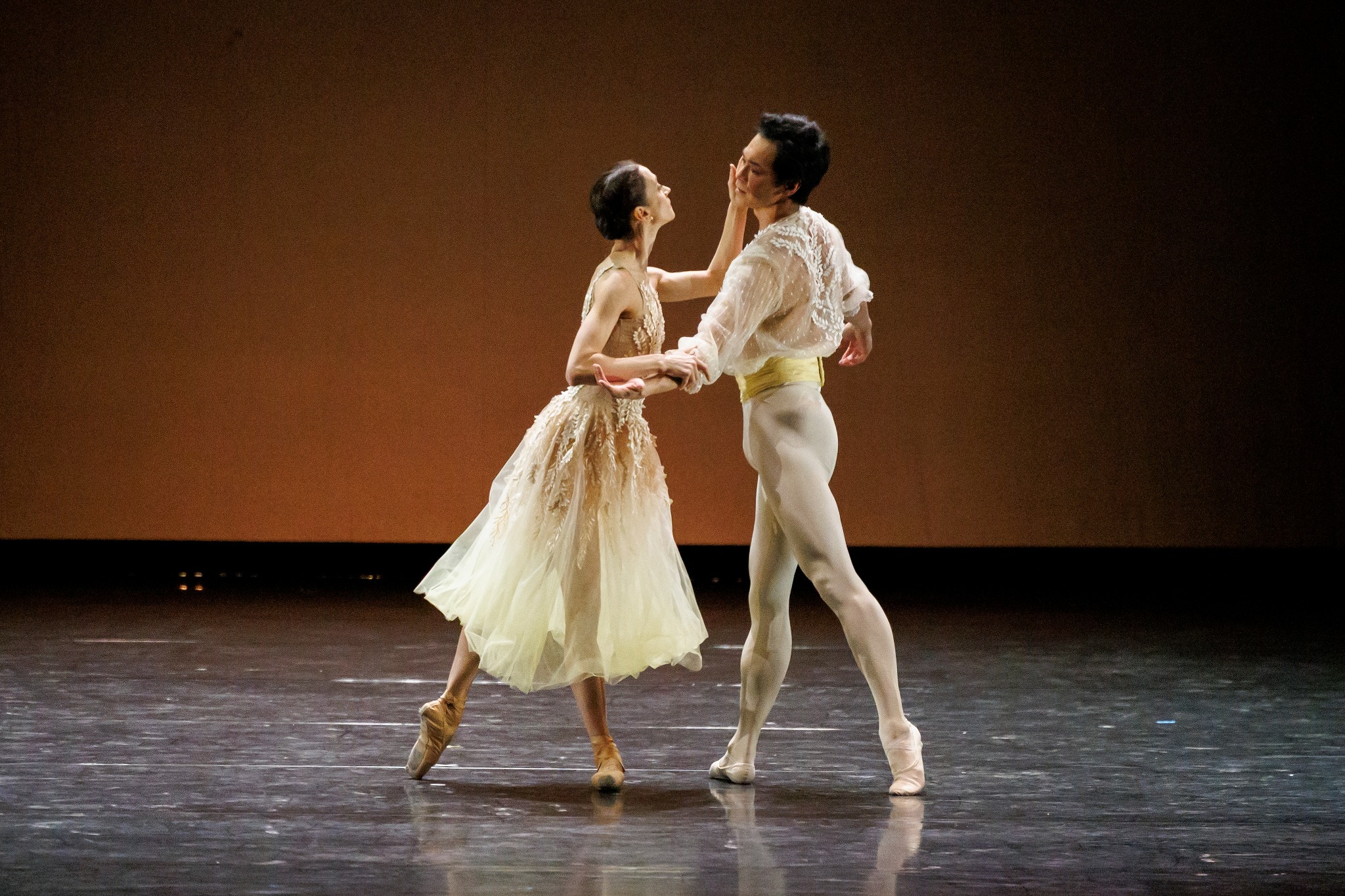
The National Ballet of Canada then brings Distorted Familiarity to the stage, a new work by Canadian choreographer and Ballet West Principal Dancer Katlyn Addison. This duet performed by Principal Dancers Naoya Ebe and Svetlana Lunkina, explores love, sacrifice and resilience. The story is not obvious, but the feelings are. The choreography is beautiful, soft and tender. There is something very genuine about the tenderness between the two dancers, while the choreography also acknowledges the sacrifices and hardships that can come with love and family.
For me, the costumes were one of the most beautiful parts of the piece. Designed by RVNG Couture’s Jordan Hyatt, the dancers wear soft, lacy white costumes with touches of yellow that give the whole duet a delicate, almost dreamlike quality. It is also a treat to have live music, performed by violinist Aaron Schwebel and pianist Andrei Streliaev, which added to its delicate, atmospheric quality.
Now to the main event: In a solo titled The Unruly Heart, choreographed by Alyssa Martin and performed to “It’s All Coming Back to Me Now” (1996) by Céline Dion, we finally get to see Tessa Virtue in all her glory. The solo did not disappoint. It is quirky, fun, full of energy and full of body, and Virtue does not hold back. There is something so joyful about watching Virtue throw herself into movement that is so far removed from the precision of figure skating, while still bringing that incredible control and physicality she is known for.
The choreography is also unapologetically Martin, making this a really fun pairing of performer and choreographer. This piece made me realize exactly why I love Martin’s work so much: it is filled with joy. You can feel that it comes from someone who genuinely loves dance and wants to share it with whoever takes her up on the challenge. I feel like she was the perfect pairing for Virtue for this reason. Martin gave Virtue the freedom to be playful, expressive and completely herself, while also pushing her a little farther than she may have gone otherwise, which is exactly what this piece needed.
The work also feels wonderfully cinematic, helped by lighting designer Simon Rossiter. The lighting grid is lowered so that the lights span across the stage and out over the audience, turning the theatre into something that feels more like a rock concert. It is big, bright and completely over the top in exactly the right way.
Although Virtue is the final piece of the programme, the fun continues into the curtain call, with dancers dressed in gold and waving pom-poms in a final bit of choreography by Martin, performed by dance students from The Creative School at Toronto Metropolitan University.
I love the idea of 'Legends' as a theme for Fall for Dance North, particularly because this programme shows that there is no one way to be a legend. From Fosse and Verdon’s iconic choreography, to Heggen still creating and performing at 80, to the generations of Bharatanatyam dancers, The National Ballet of Canada entering its 75th anniversary year, and Virtue stepping into a new role, there are so many different stories of artistry and longevity here.
There is still plenty more to see at Fall for Dance North, and I’ll be back for Signature Programme 3 next. Make sure to check out the huge amount of programming happening across the festival. It’s the best time of year for dance in Toronto!
LEGENDS: Signature Programme 1, presented by Fall for Dance North, runs until October 18th, 2026, at the Bluma Appel Theatre (27 Front St E, Toronto, ON). Single tickets are $25, and ticket packages for all three signature programmes are $65. The festival also offers a variety of free and ticketed dance events continuing through October 26th. Tickets can be purchased online here.
For more information, check out: FFDnorth.com
Facebook: @fallfordancenorth and Instagram and Twitter: @ffdnorth
Written by Deanne Kearney \ DeanneKearney.com @deannekearney
0 Comments Add a Comment?