Review: Romeo and Juliet (The National Ballet of Canada)
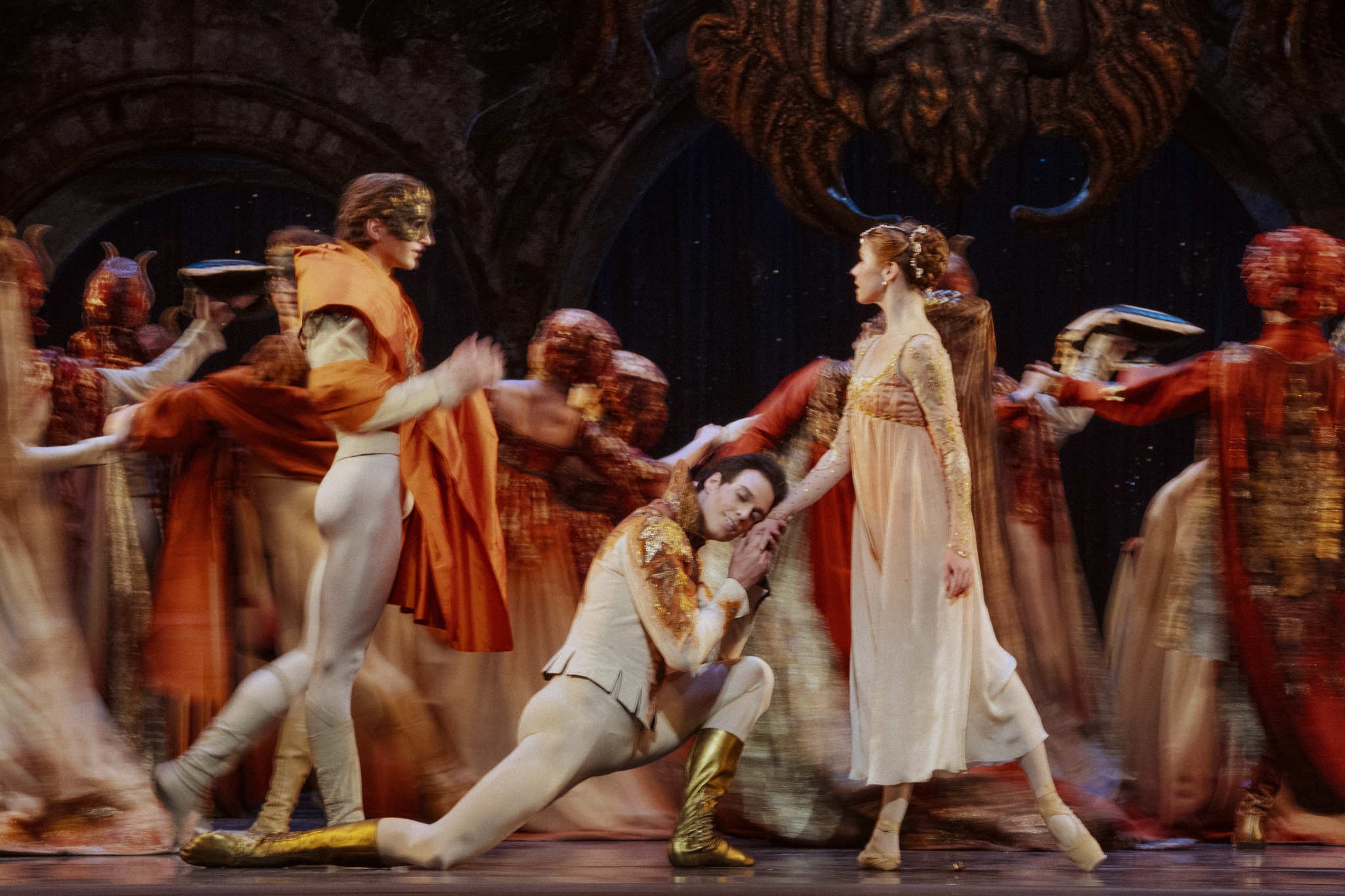
We know how it ends. We know the lovers, the feud and the fatal misunderstanding. Yet, more than 60 years after John Cranko’s Romeo and Juliet first appeared in The National Ballet of Canada’s repertoire, this ballet feels as alive as ever. First performed by the company in 1964, Romeo and Juliet has become deeply woven into the National Ballet’s artistic history. Its return to open the company’s 75th-anniversary season shows why it has remained such a defining work for the company: the choreography is endlessly engaging, the storytelling remarkably clear, and the world of Verona feels as vivid as ever.
Cranko’s choreography is remarkably effective at telling this familiar story. He has a strong sense of which characters to highlight, when to shift the mood and when to fill the stage with the entire ensemble. The trio of Romeo, Mercutio and Benvolio brings an athletic, youthful energy to the opening act, with impressive tours en l’air and playful, loose arm movements that give the three friends a sense of carefree physicality. Juliet, meanwhile, moves with a gentler quality that still feels full of youthful energy, making her innocence and excitement immediately visible. When we enter the more formal world of the Capulet balls, the movement becomes much more serious and staccato, with the controlled physicality of the ensemble helping to establish the older generation and the rigid world Juliet is expected to inhabit. Then there are the sword fights, which bring their own combination of athleticism, danger and theatricality. The choreography is simply fun to watch.
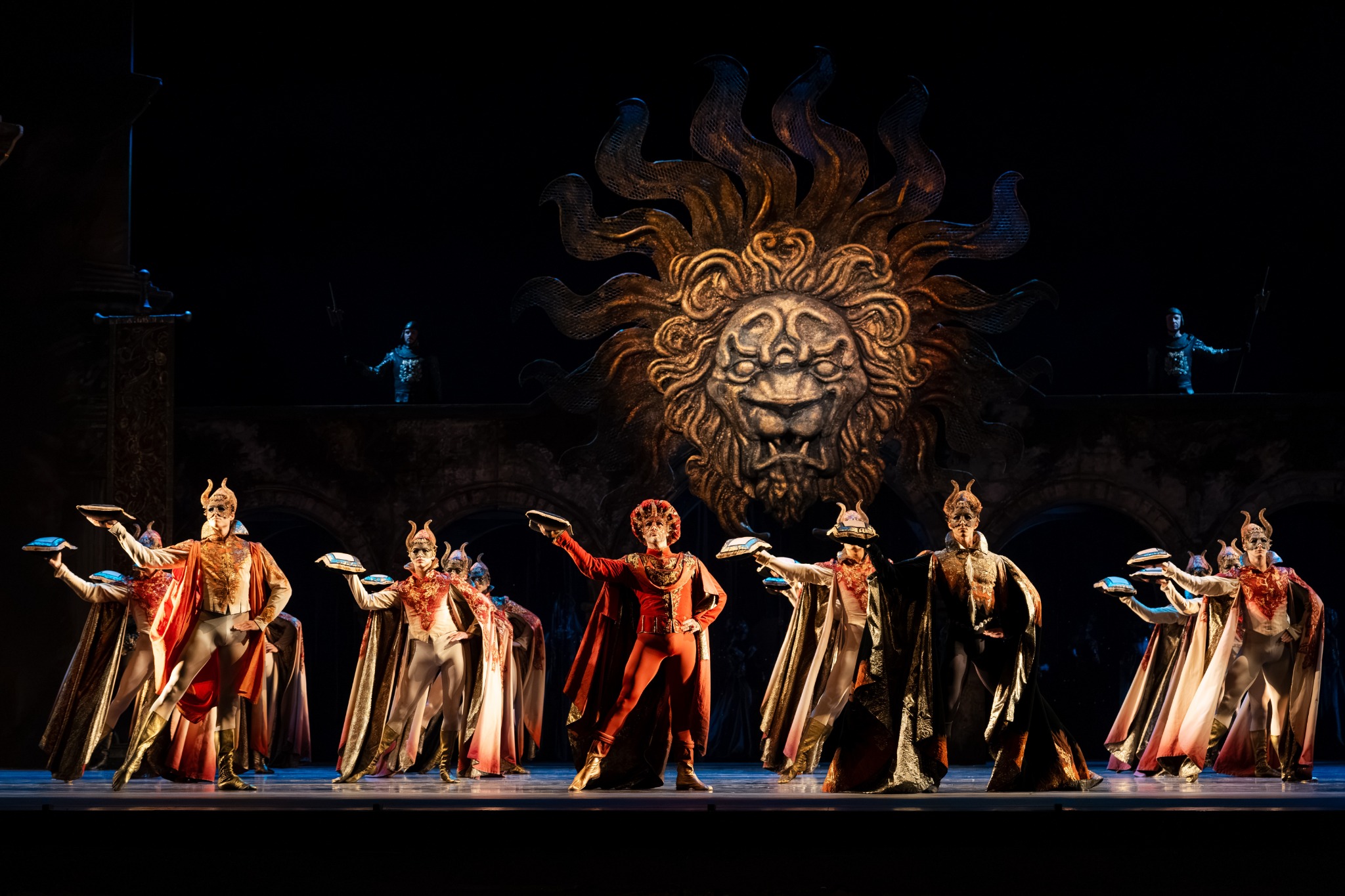
The world Cranko creates is matched by Susan Benson’s enormous sets and costumes, which feel appropriately old-fashioned for the era of the story. The production moves through a number of locations, from busy town squares to the grand interiors of the Capulet home, creating the sense of a whole city unfolding around the dancers. A gigantic lion’s head is one of the production’s most memorable set pieces. The scale of the sets gives the production a wonderful sense of grandeur, and the constant changes in scenery help make Verona feel like a real place rather than simply a backdrop for the dancers.
Prokofiev’s score is another major part of what makes this production so epic. It is one of my favourite scores in the ballet repertoire, as it is so full of drama, particularly during the ball scene, with the famous “Dance of the Knights” creating a sense of grandeur, tension and foreshadowing. The music builds anticipation that you can feel throughout your entire body. The brilliant orchestra, led by David Briskin, did a wonderful job of bringing all of that drama to life.
For this anniversary production, the company has made a deliberate choice to cast younger dancers as Romeo and Juliet rather than its most established principal dancers for opening night. Second soloist Isabella Kinch dances Juliet, while corps de ballet member Oliver Yonick makes his debut as Romeo. The choice puts the focus on the next generation of dancers, which is fitting for the anniversary, but also for a story centred on young people trying to find their place in a grown-up world.
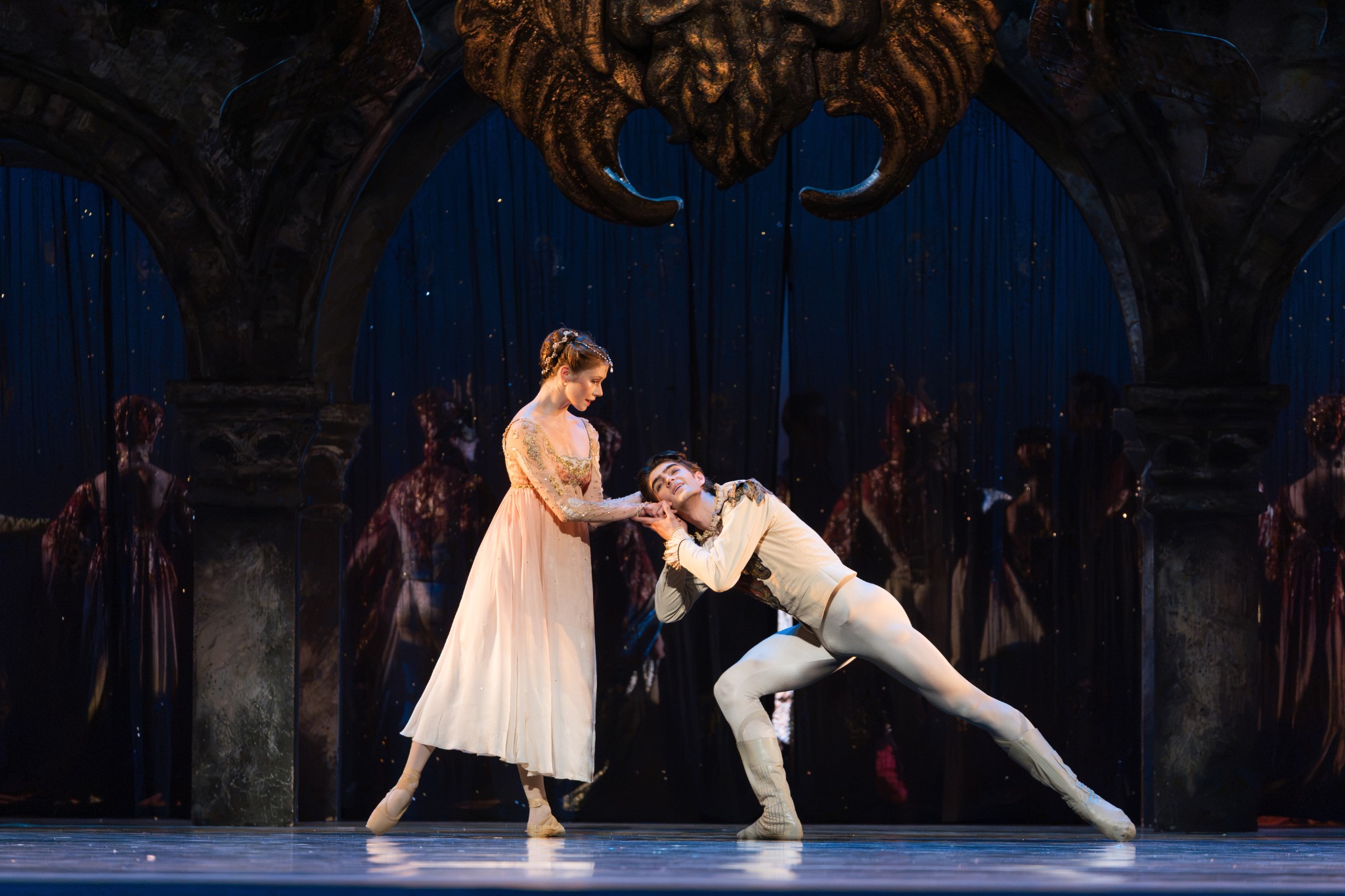
Isabella Kinch is a wonderful Juliet, bringing both the innocence and youthful energy of the character to the stage. Her bourrées are especially beautiful, but truly all of her dancing is wonderful, paired with great acting throughout the role. She was a joy to watch. Oliver Yonick’s Romeo, brought a youthful energy and freshness to the role that suited the character pretty well. He handled the role with confidence, and I look forward to seeing more of him as he continues to grow within the company.
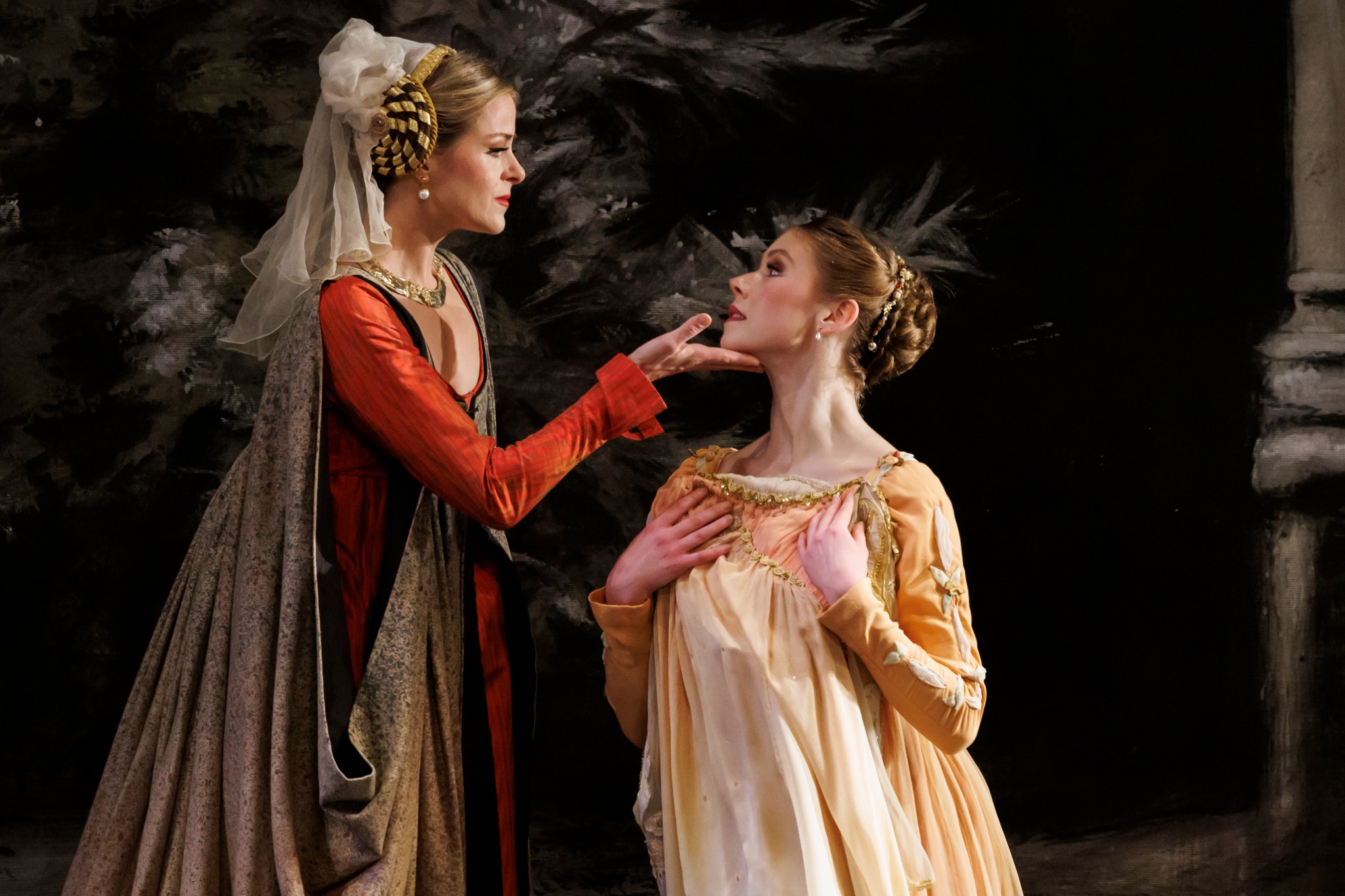
Donald Thom was a particular standout as Mercutio, bringing so much charisma and playfulness to the character. His smile could be seen from the back of the theatre, making him instantly lovable, sadly making his death in the ballet all the more upsetting. I knew it was coming, of course, but I was still genuinely sad to see him go. Ben Rudisin’s Tybalt was equally memorable for very different reasons. He has a real talent for playing the villain, bringing an intimidating aggression to the role while maintaining the technical precision that makes his dancing so impressive. While Heather Ogden’s Lady Capulet was another emotional high point, particularly in the final scenes of the second act, which had more than a few people around me rubbing away tears.
One of the greatest strengths of this ballet is that by the end of the performance, you are so invested in the characters that even though you know the ending, it doesn’t make it any less painful. The final scenes take their time, allowing the story to unfold without rushing through the emotion or becoming overly sentimental. This is the result of Cranko’s choreography, the performers, the music and every element of the production working together so effectively that the story feels completely alive.
What a wonderful way to begin the National Ballet’s 75th anniversary season. Walking out of the theatre, audiences were met with cupcakes and champagne, but there were plenty of other little memorable anniversary moments throughout the night. Before the performance, more than 200 company alumni in the audience were recognized with a round of applause. The season also began with a Share the Magic performance, welcoming 1,800 community members experiencing challenging circumstances to attend the opening matinee performance for free. A special pre-show performance by Naomi and Derek Martin of Tribal Vision Dance, a First Nations dance group from Six Nations of the Grand River, brought the Grass Dance and Jingle Dress Dance into the lobby, celebrating Indigenous dance traditions and adding another layer of cultural connection to the anniversary celebrations.
The company’s media videos released alongside the production are also worth watching. They include archival footage and interviews with dancers who have performed these roles over the years, giving you a chance to see how Romeo and Juliet has been performed by different generations of the company. Knowing that history makes watching the dancers on stage now feel even more special.
The National Ballet is doing a lot to make 75 years feel like something worth celebrating, while also making sure the anniversary is about more than just looking back. There is a real sense of the company celebrating the dancers, artists and audiences who have shaped it, while looking ahead to the generations who will carry it forward. After such a strong opening, I cannot wait to see what else this anniversary season has in store!
Romeo and Juliet, presented by the National Ballet of Canada at the Four Seasons Centre for the Performing Arts (145 Queen St W, Toronto, ON M5H 4G1), is playing until November 8th, 2026. For tickets, please click here.
National.Ballet.ca | Socials: @nationalballet
- Photo 1: Oliver Yonick, Chase O'Connell and Isabella Kinch in Romeo and Juliet. Photo by Karolina Kuras. Courtesy of The National Ballet of Canada.
- Photo 2: Artists of the Ballet in Romeo and Juliet. Photo by Drew Berry. Courtesy of The National Ballet of Canada.
- Photo 3: Heather Ogden and Isabella Kinch in Romeo and Juliet. Photo by Bruce Zinger. Courtesy of The National Ballet of Canada.
- Photo 4: Isabella Kinch and Oliver Yonick in Romeo and Juliet. Photo by Drew Berry. Courtesy of The National Ballet of Canada.
Written by Deanne Kearney | DeanneKearney.com @deannekearney
0 Comments Add a Comment?