SummerWorks 2026 Reviews (Part 1): Golden Rez Dog (Marcus Merasty) and Tandava (Nova Bhattacharya & Suvendrini Lena)
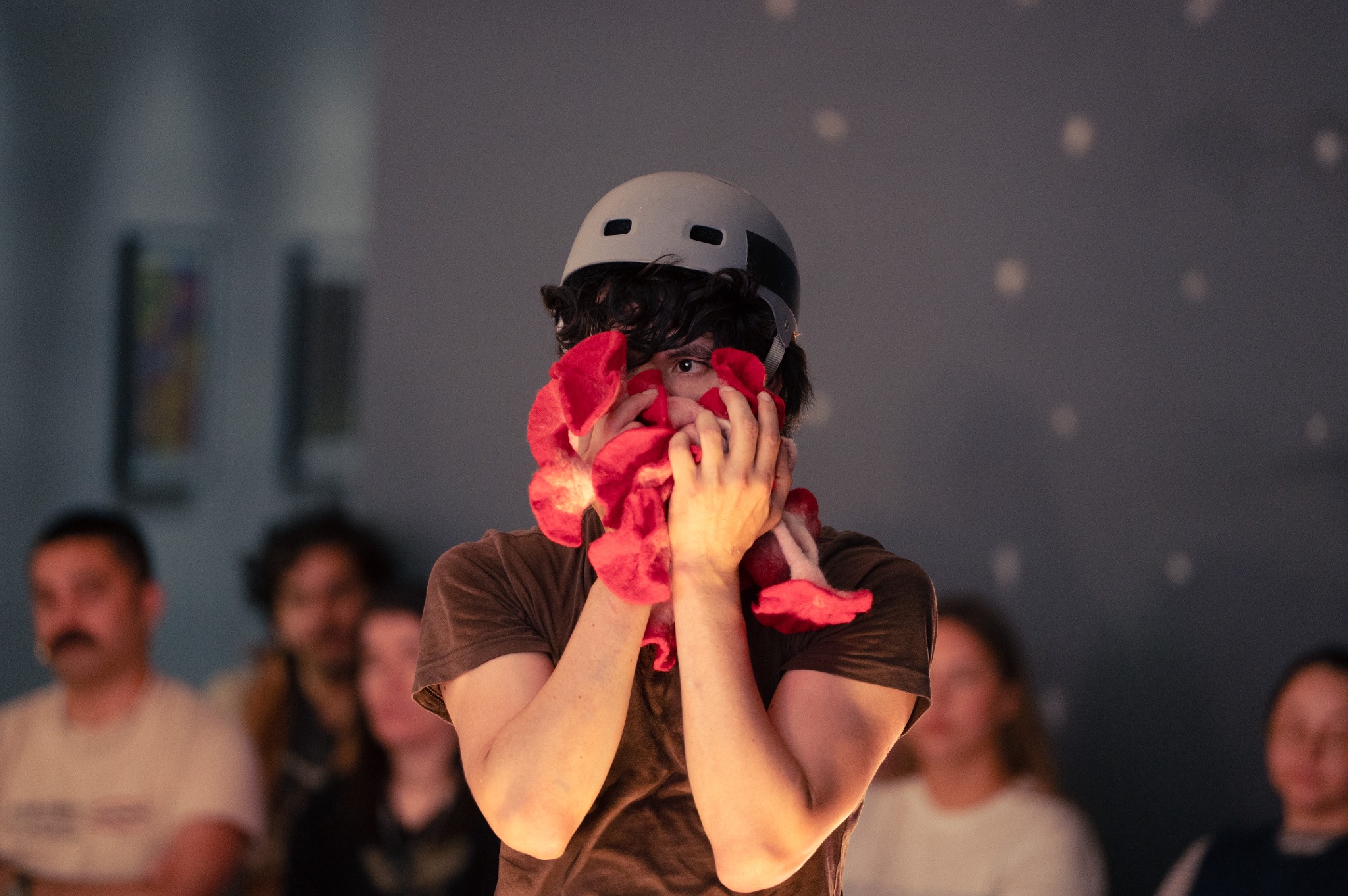
For more than three decades, SummerWorks has been a home for contemporary performance in Toronto, showcasing work by local and international artists. This year's festival features 27 live performances, all embracing the theme Fight | Flight, an invitation for artists to respond to a world shaped by uncertainty, conflict, resilience, and transformation. And boy, did this year's artists take that seriously.
Over the course of a marathon day of festival-going, I attended four productions across two different venues. The performances I encountered were powerful, but certainly not easy viewing. Some of the themes covered in the works included the looming threat of a Chinese invasion of Taiwan, the Sri Lankan Civil War and Tamil genocide, Indigenous experiences of colonialism, and child loss.
For a little breathing room, I'm dividing my coverage into two parts. This first review looks at two works presented at The Citadel: Ross Centre for Dance's Mimi Herrndorf Studio Theatre: Marcus Merasty's Golden Rez Dog and Tandava (தாண்டவம்) by Nova Bhattacharya and Suvendrini Lena. Both dig into histories of family, culture, and erasure. Tomorrow, I'll turn to Ping-Hsiang Wang's Retina Maneuver and Syreeta Hector's No(body).
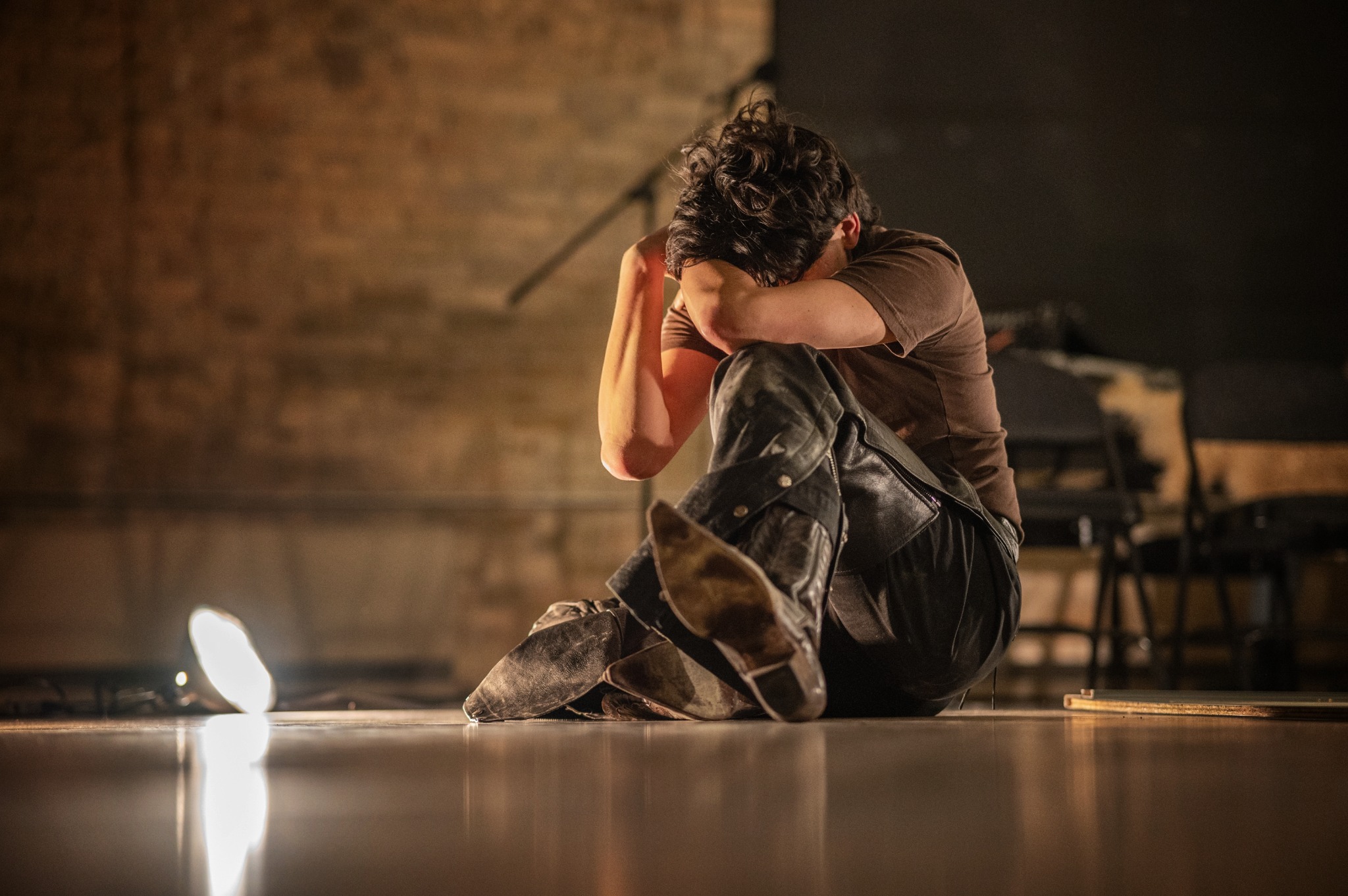
My SummerWorks marathon began quietly with Marcus Merasty's 45-minute solo work, Golden Rez Dog. Nēhithaw/Cree choreographer and multidisciplinary artist Merasty draws inspiration from his aunt Francine Merasty's Cree poem The Old Rez Dog alongside Lucius Apuleius' The Golden Ass. The piece traces Merasty's journey into his own family histories, exploring how these stories shape his sense of self. Throughout, he plays with the many dualities of his Indigenous identity, slowly transforming into a dog before eventually returning to human form.
Before the dancing even begins, Merasty writes his aunt's entire poem across a large green chalkboard lying on the stage floor. We don't get to read the poem, nor do we need to. Instead, the chalkboard evokes the history of the erasure of Indigenous knowledge and stories. Each word lands slowly and deliberately, the scratch of chalk almost ASMR-like in the quiet theatre. Later, those words are erased as Merasty slowly moves his body across the chalkboard.
The chalkboard continues to transform throughout the work. What begins as a surface for writing eventually becomes almost percussive as Merasty's movement shifts toward that of a dog. Wearing tap shoes, he slams and scrapes against it, producing sounds so loud and metallic that they make me, and much of the audience, flinch. His body begins taking on recognizably canine gestures, including the shaking of a back leg, but there is nothing funny or cartoonish about the transformation. His movements are slow and purposeful, allowing the transformation to happen gradually until the dog seems to emerge from the human body.
The result is a piece that collapses personal, familial, and collective histories into the same space. His transformation into the rez dog becomes less about simply imitating an animal and more about navigating the histories and relationships that have shaped his own identity. The slow pace of Golden Rez Dog asks for patience, but that patience pays off. It is a beautiful solo, rich with imagery that reveals more the deeper you are willing to dive in.
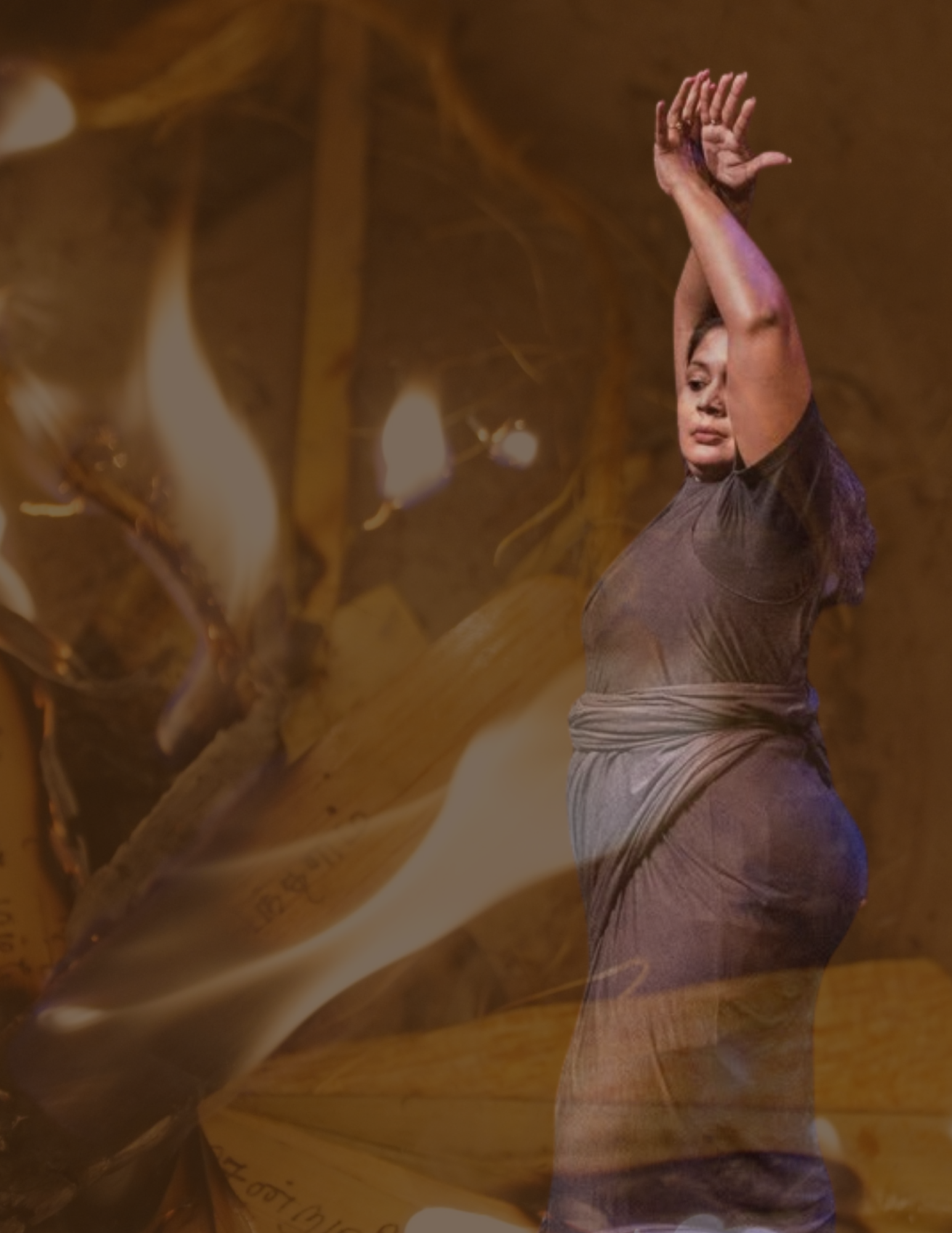
Later that day, I returned to the same theatre for something still taking shape: Tandava (தாண்டவம்), a work-in-development by choreographer Nova Bhattacharya and creator, director, and playwright Suvendrini Lena. The 45-minute work blends dance, poetry, sound, and history, drawing from the verses of sixth-century Tamil poet-saint Karaikkal Ammaiyar and the histories of the Sri Lankan Civil War.
Bhattacharya welcomed us into what she called her "creative chaos," thanking the audience for being part of a work that is still very much taking shape. Many sections already feel quite developed, with some of the strongest imagery coming through nature, particularly fire. We hear the crackling of sparks as arms twitch and flicker like flames, while fire appears again through projections. Tree imagery offers another recurring natural presence, emerging through the movement of the small cast of four dancers, Bhattacharya included.
For those, like myself, who are less familiar with this history, Sri Lanka experienced a nearly three-decade civil war that grew out of longstanding tensions and discrimination between the Sinhalese majority and Tamil minority, resulting in mass displacement and a devastating loss of life. One event particularly important to Tandava occurred on May 31, 1981: the burning of the Jaffna Public Library. The library was a major repository of Tamil history and culture, housing tens of thousands of books and rare manuscripts. Its destruction has endured as a powerful symbol of the attempted erasure of Tamil cultural memory. This history makes Tandava's recurring images of fire, language, manuscripts, and preservation all the more potent.
As Bhattacharya shares some of this history with us directly on stage, the images of creation and destruction throughout the work take on greater weight. In one particularly strong section, she covers her hair and face with ash, carrying the fire imagery out of the projections and soundscape and directly onto her skin.
What struck me most, however, came after the performance. A talkback invited audience members to offer feedback on the developing work, but the conversation quickly became something else. One after another, people spoke about what these histories meant in their own lives and families, some becoming emotional as they discussed how rarely they see them acknowledged or represented. Rather than offering notes on what should be changed, many simply thanked the artists for making the work, and for making it with such care.
My SummerWorks coverage continues tomorrow, where I'll be turning my attention to Ping-Hsiang Wang's Retina Maneuver and Syreeta Hector's No(body), two works that start from a lighter, more playful place before diving into much more serious subject matter that brings us right back to the theme of Fight | Flight.
The SummerWorks 2026 Festival runs until August 16, 2026. For more information, visit SummerWorks.ca or follow @SummerWorksFun on Facebook, Instagram, and X. Tickets can be purchased here.
Photos:
- Photo of Marcus Merasty in Golden Rez Dog. Photo by Pablo Riquelme.
- Photo of Marcus Merasty in Golden Rez Dog. Photo by Pablo Riquelme.
- Photo by Ömer Yükseker & Rajvi Dedhia of Tandava.
Written by Deanne Kearney
DeanneKearney.com @deannekearney
0 Comments Add a Comment?